A favorite necklace should be easy to find, not a tiny puzzle at the bottom of a drawer. A thoughtful necklace storage routine is less about buying a complicated organizer and more about preventing chains from crossing, catching, and tightening into knots. A small change—closing each clasp, separating pieces, and choosing the right position—can make getting dressed feel simpler while helping delicate details avoid unnecessary pulling.
Flexible necklace storage begins with what you wear. A long pendant, a fine chain, and a substantial beaded strand do not need identical homes. Start with the pieces you reach for most, then create a place for each necklace that is visible enough to use and protected enough to rest. These practical steps work in a bedroom drawer, on a dressing table, or in a suitcase, without assuming every necklace has the same materials or care needs.
Start with a quick reset before putting necklaces away
Most tangles begin before a necklace reaches its organizer, so necklace storage starts with the way you put a piece away. A chain that is dropped in a dish open-ended can slip through its own links or catch on another clasp. Before putting a piece away, take a moment to remove it carefully, check that the chain is not twisted, and close the clasp. Fastening the ends keeps the chain in a defined loop instead of leaving two loose tips free to weave together.
Lay the necklace on a clean, dry surface and let it settle naturally. If there is a small twist, hold the chain gently near the clasp and allow the pendant to hang; do not yank or tug at a stubborn knot. For a fine chain, use fingertips and good light to ease the links apart gradually. Pulling harder can stress a delicate chain or its connection to a pendant. If a knot will not loosen with gentle handling, pause rather than turning a minor tangle into a repair.
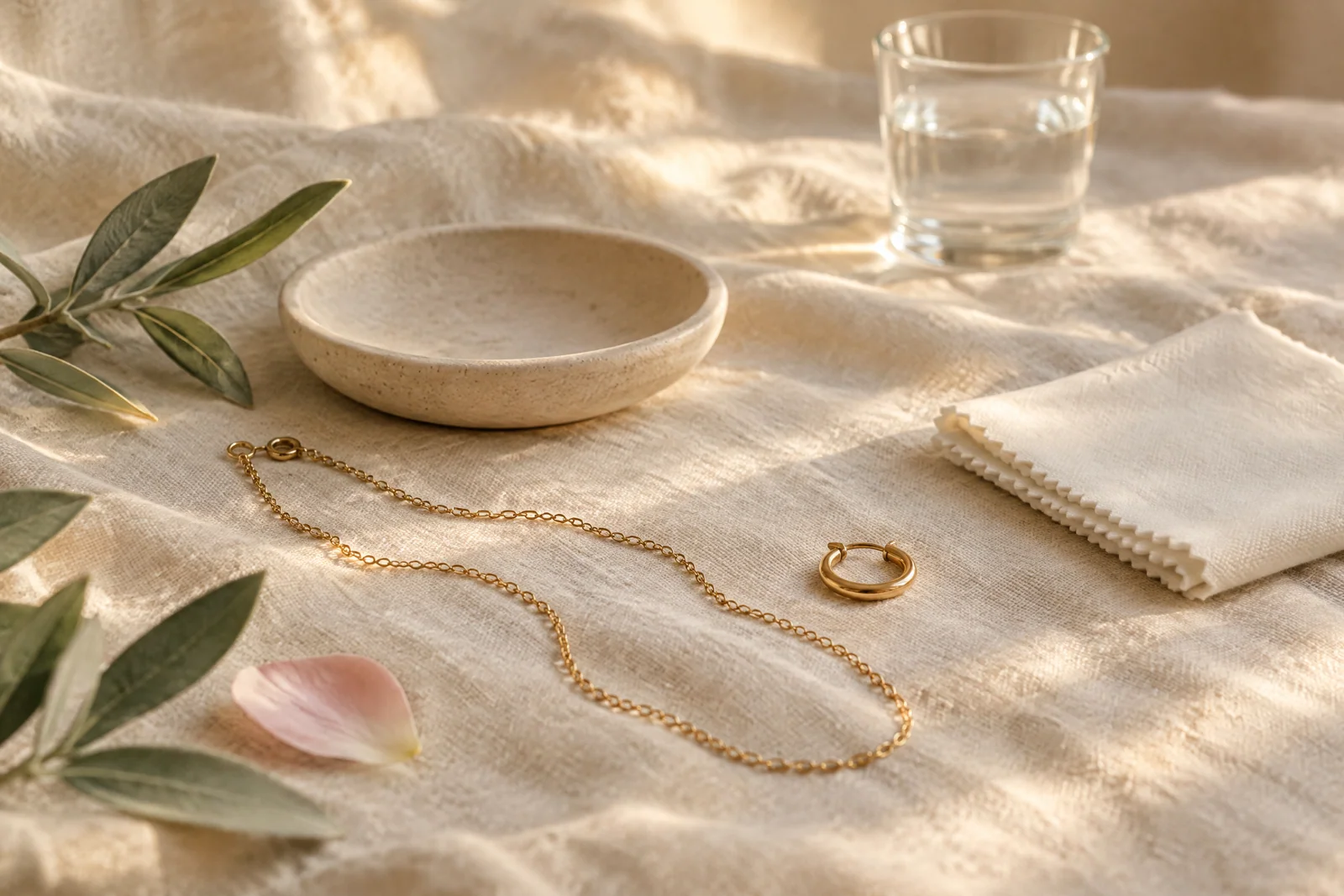
Give necklaces a little attention after wearing, too. Wipe away visible surface residue with a soft, dry cloth when appropriate for the piece, then let it rest before storing. This is a simple housekeeping step, not a universal cleaning prescription: a necklace with beads, pearls, shell, cord, plating, or other mixed components may need different care. Follow any care instructions supplied for the specific item, and avoid applying liquids or cleaners simply because another necklace tolerates them.
Use the same small sequence every time: unclasp only when taking the necklace off, lay it flat, check for twists, fasten it, and place it in its own spot. A repeatable necklace storage routine is more useful than an elaborate system you do not maintain. If you are browsing different lengths or pendant styles, the necklace collection is a useful reminder that pieces vary in shape and scale—and storage should accommodate those differences.
Choose a home that keeps each chain separate
For everyday necklace storage, a jewelry tray with divided sections is a straightforward choice. Give each necklace its own compartment, fasten the clasp, and lay the chain in a relaxed loop with the pendant facing up. Compartments create a simple boundary between chains and keep pendants from rubbing against other pieces. Choose a tray with enough room for the longest necklace you own; a tight coil can encourage kinks, and a crowded section defeats the point of separating items.
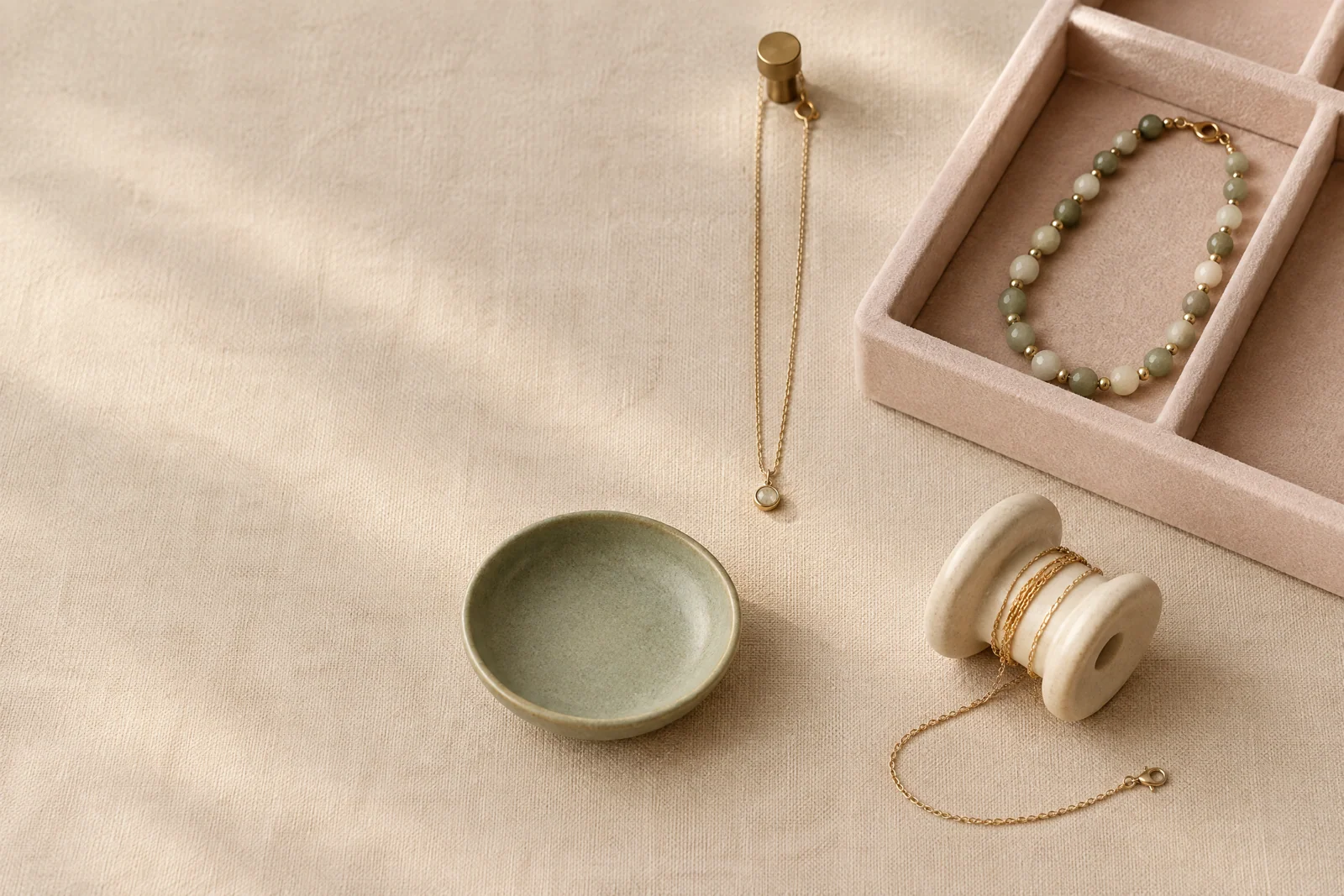
For visible necklace storage, a hanging organizer can make frequently worn necklaces easy to see. Individual hooks or pegs keep chains apart and let gravity help them hang straight, while a cabinet or covered wall organizer can reduce exposure to dust and incidental contact. Leave space between hooks so pendants do not bump or overlap. Check the fastening point now and then: a tiny clasp should be secure, and a heavier pendant should not be supported by a delicate chain stretched under tension.
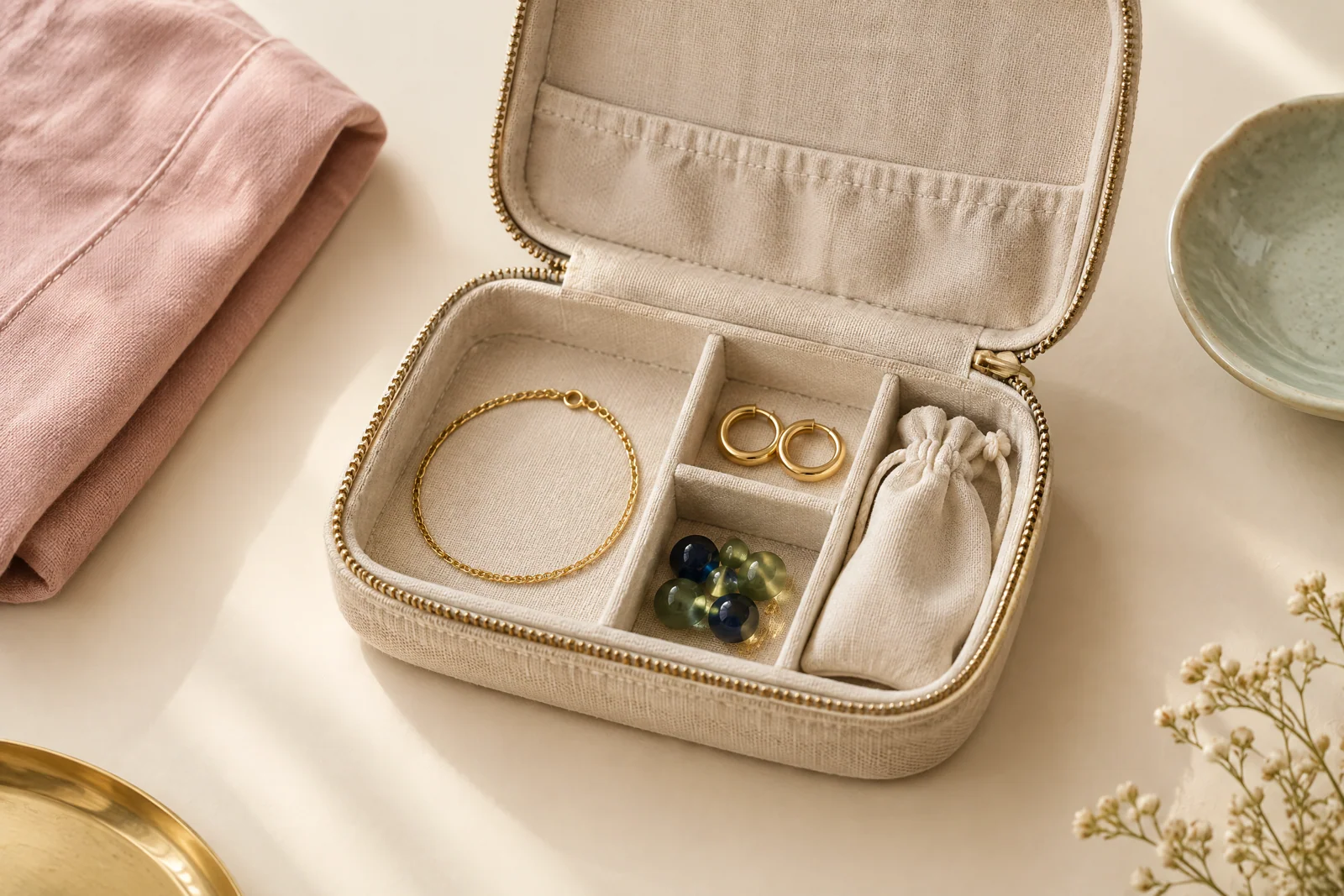
Drawer-based necklace storage works well when visibility and protection matter more than display. Use soft-lined, divided inserts or small individual pouches rather than letting necklaces share an open compartment. If you use pouches, fasten each clasp and leave enough room for the chain to lie without a tight bend. Keep the pouch material smooth and clean; avoid tossing loose accessories, pins, or other jewelry into the same pocket, where they may catch on links.
There is no single best method for necklace storage because each necklace has different needs. A longer chain may hang neatly on a dedicated hook, while a short delicate one may sit more securely in a shallow compartment. A strand with larger beads or a noticeable pendant needs room so its shape is not pressed under other items. Keep the arrangement simple enough that you can return each piece to its place in seconds. For more options by type, browse necklaces alongside accessories and consider the actual size and structure of what you own before selecting an organizer.
Match the storage method to the necklace
Fine chains benefit most from separated necklace storage and a relaxed position. Store one per compartment or hang each on its own hook; avoid a shared bowl where loose lengths can cross. If you prefer a drawer, place the fastened chain in a small, separate pouch or a divided tray. A pendant can be positioned beside the chain rather than buried beneath it, so the weight does not pull one section into a sharp fold.
For longer necklaces, choose necklace storage only after checking the full length against a box or tray. A chain that must be folded sharply to fit can become awkward to untangle and may be pressed by the lid. Hanging storage can suit a long design if the hook is stable and the necklace hangs freely. If you choose a pouch, do not force a large loop into a tiny space; use a larger pouch or a longer compartment instead.
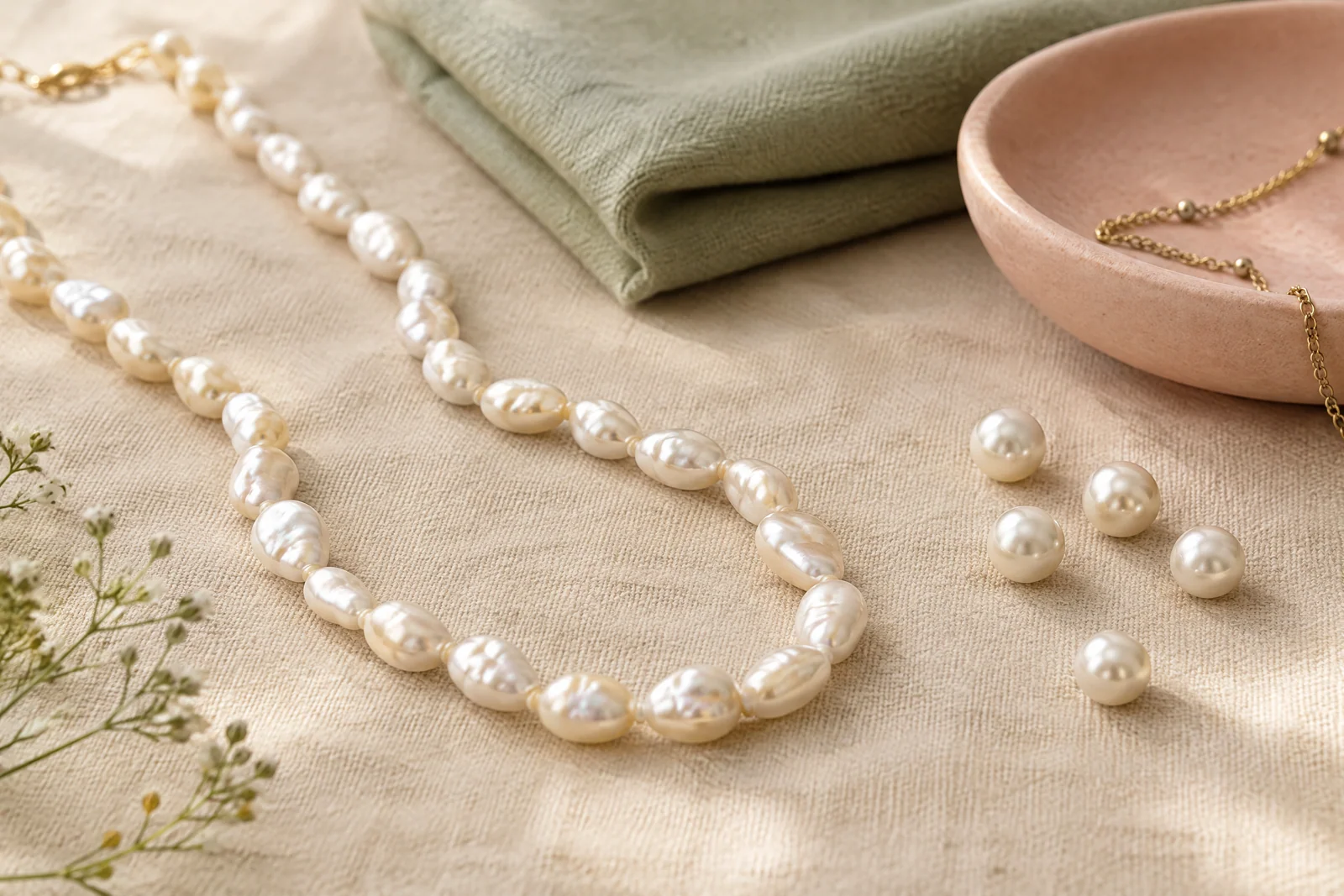
Beaded necklaces and necklaces with larger decorative elements need their own room in necklace storage, too. Set them in a shape that follows their natural curve, rather than pulling them taut or piling other jewelry on top. Keep clasps and extender chains from catching on adjacent pieces. For a strand made from mixed materials, take a conservative approach: a soft compartment or separate pouch helps prevent contact, but storage alone does not replace material-specific care. Do not assume a bead, cord, plated finding, or metal component can all be cleaned or treated the same way.
Necklaces you wear in frequent rotation should be accessible, but not exposed to every passing sleeve or hand. Keep them in a stable spot away from areas where they could be knocked to the floor. Pieces worn less often can be stored in a closed box or drawer, separated and protected from pressure. Whatever the method, resist stacking chains together “just for tonight.” That temporary pile often becomes the next morning's knot. A dedicated place for each piece is the most reliable form of necklace storage, whether the piece is barely worn or part of your daily routine.
Make a small-space and travel routine that lasts
Small-space necklace storage does not require a full jewelry cabinet to keep a collection orderly. In a small space, use vertical room: a compact hanging organizer inside a closet door, a few separated hooks, or a divided tray in a shallow drawer can hold a useful rotation. Choose a location that is dry and away from direct heat or splashes. Keep the most-used pieces in the easiest-to-reach spots, and put occasional pieces in individual pouches or compartments nearby.
A brief edit makes necklace storage easier before you arrange everything. Sort necklaces by how often you wear them, then by length or shape if that makes them easier to see. Remove empty packaging and anything that catches on chains. Keep only one necklace in each small pouch or compartment, and label sections if you have trouble remembering where a piece lives. A simple system reduces rummaging, and less rummaging means fewer loose chains brushing against one another.
For a trip, necklace storage begins by packing each necklace separately rather than in one shared pocket. Fasten the clasp first. A small jewelry pouch with individual compartments is an easy option; a soft, clean pocket can work for a single necklace if there are no other items that may snag it. Lay the piece flat with enough room to avoid tight folds, and place the pouch where heavier objects will not crush it. Avoid wrapping delicate chains tightly around objects or pushing them into a crowded case. For a piece with beads, a prominent pendant, or mixed materials, choose a little extra room and follow its specific care guidance.
When you return home, restore your necklace storage routine: unpack necklaces promptly, check each one for twists, and put it back in its usual place. That closes the loop between travel and everyday use instead of letting a travel pouch become a long-term catchall. Once a week—or whenever the drawer starts to feel crowded—take a quick look at the setup. If two chains are sharing a compartment, if a pendant is pressed under another piece, or if the longest necklace no longer lies comfortably, make a small adjustment rather than waiting for a tangle.
For a question about a particular piece or its care, use the verified contact details at contact rather than guessing at a treatment. A calm, consistent routine is the heart of useful necklace storage: fasten, separate, give each piece room, and return it to the same place. The result is a collection that is easier to see, easier to wear, and less likely to turn getting dressed into untangling time.
Related reading
For more gentle jewelry habits, read How to Care for Gold-Plated Jewelry Gently, A Gentle Care Guide for Pearl and Faux-Pearl Jewelry, and How to Pack Jewelry for a Weekend Away.