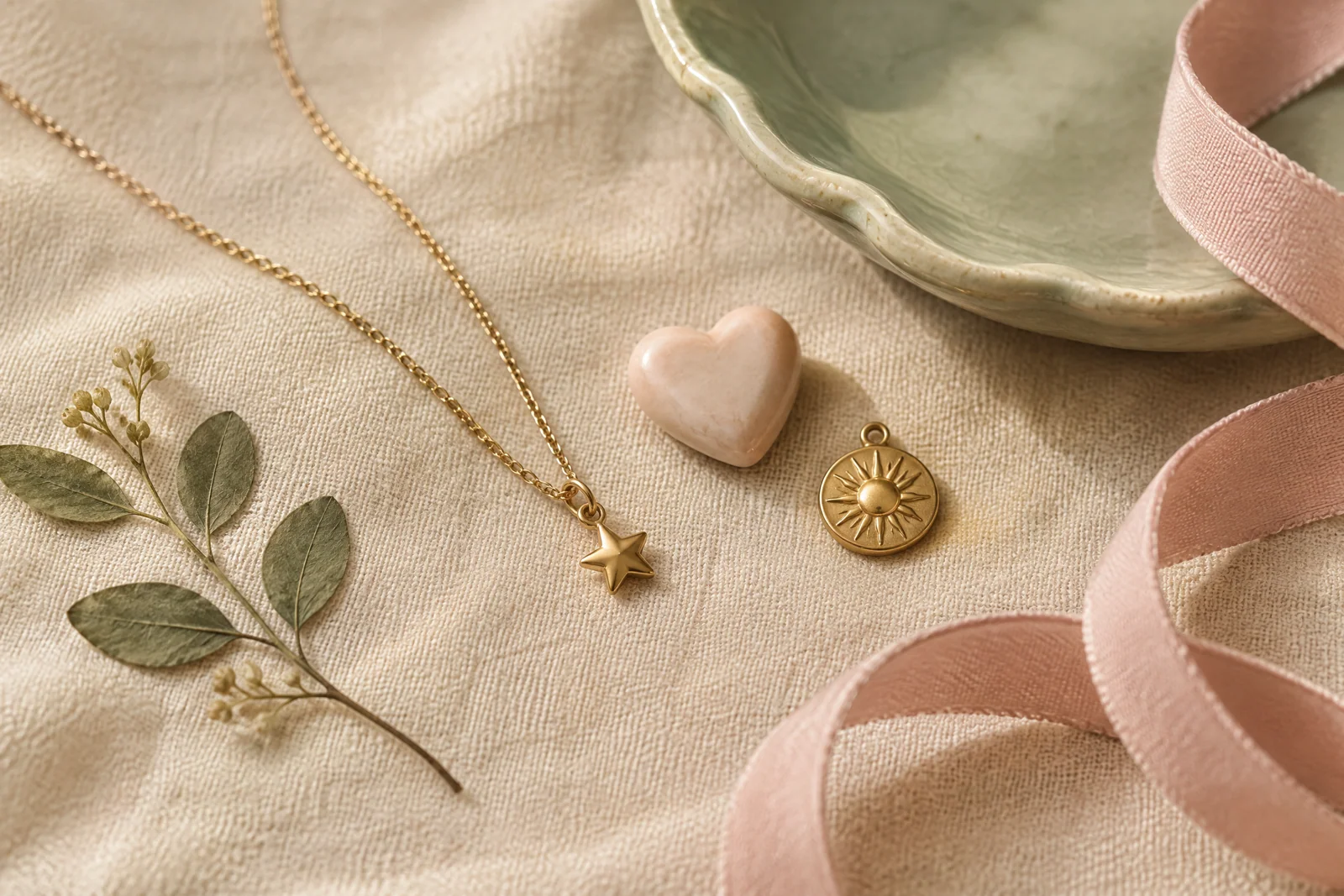
The best symbolic gifts rarely need a grand explanation. A tiny sun can recall a bright morning together; a fish might nod to a favorite place by the water; a simple heart can say what a card cannot quite manage. Charm jewelry gives those small associations a place in everyday life, where the wearer can enjoy them on an ordinary Tuesday as much as on a milestone, which is part of charm jewelry’s everyday appeal. The trick is not to find the one universally correct symbol. It is to choose a piece that feels recognizably theirs. That is the heart of charm jewelry as a gift.
If you are shopping for someone else, begin with what you know about their habits, colors, and stories rather than trying to decode a supposedly fixed meaning. This guide offers a thoughtful way to choose a motif, assess the piece itself, and present charm jewelry as a personal gesture without making assumptions about what it must represent.
Start with their story, not a symbol chart
Symbols are wonderfully flexible. A star might suggest curiosity, a hopeful next chapter, or a memory of looking up at the night sky. A shell could recall a shared beach walk, while a fish might be meaningful because someone loves the sea, enjoys fishing, or simply collects playful objects. The strongest associations are often private and specific. That personal link is what gives charm jewelry staying power. Before browsing, write down two or three details you have actually observed: a hobby they return to, a place they talk about, a color they wear, or a phrase that has become part of your friendship.
Then ask what the recipient might enjoy seeing often. Someone who keeps a travel journal may like a small reminder of a destination; a person who dresses with humor may welcome an offbeat motif. A charm does not need to announce a major life event or carry a solemn message; charm jewelry can stay lighthearted. It can celebrate a running joke, a new beginning, or a quality you admire. Let the connection be warm but not overly literal: a sun motif can mean “you bring light,” without claiming to predict anything about the future.
When in doubt, steer clear of symbols with religious, cultural, or personal significance you cannot confidently interpret. Ask gently if the person already wears a motif they love, or choose a shape tied to a shared memory rather than a broad claim about what a symbol means. You can also browse the wider accessories collection for playful objects and use it as inspiration without assuming that jewelry is the right answer. With charm jewelry, the goal is recognition, not a test the recipient has to pass.
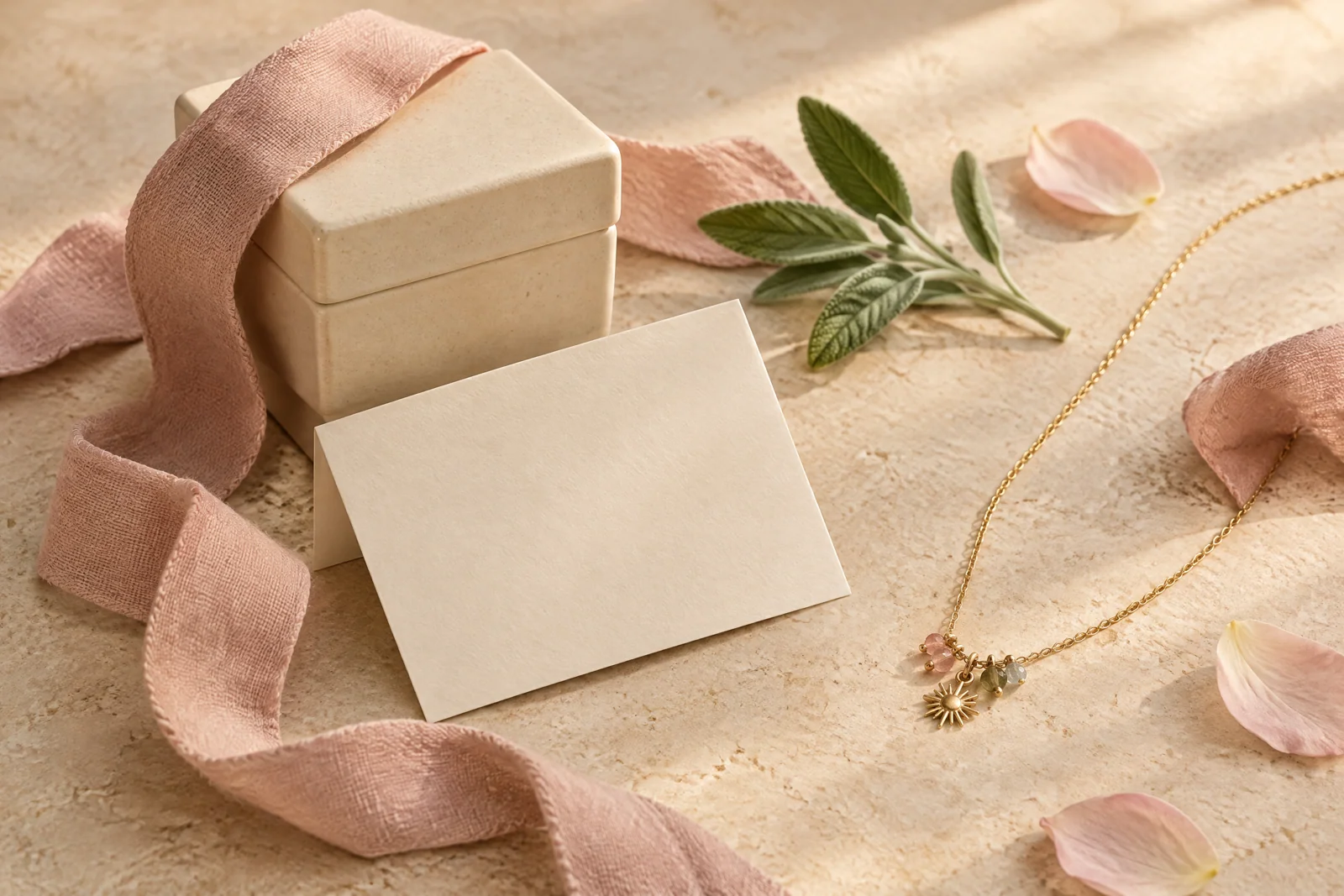
A short note makes your intention clear while leaving room for their own interpretation. “For the mornings we watched the boats come in” is more intimate than a generic explanation of what an anchor means. In that way, charm jewelry becomes a prompt for a memory rather than a message imposed on the wearer, making the gift feel personal but open-ended.
Match the motif to their personal style
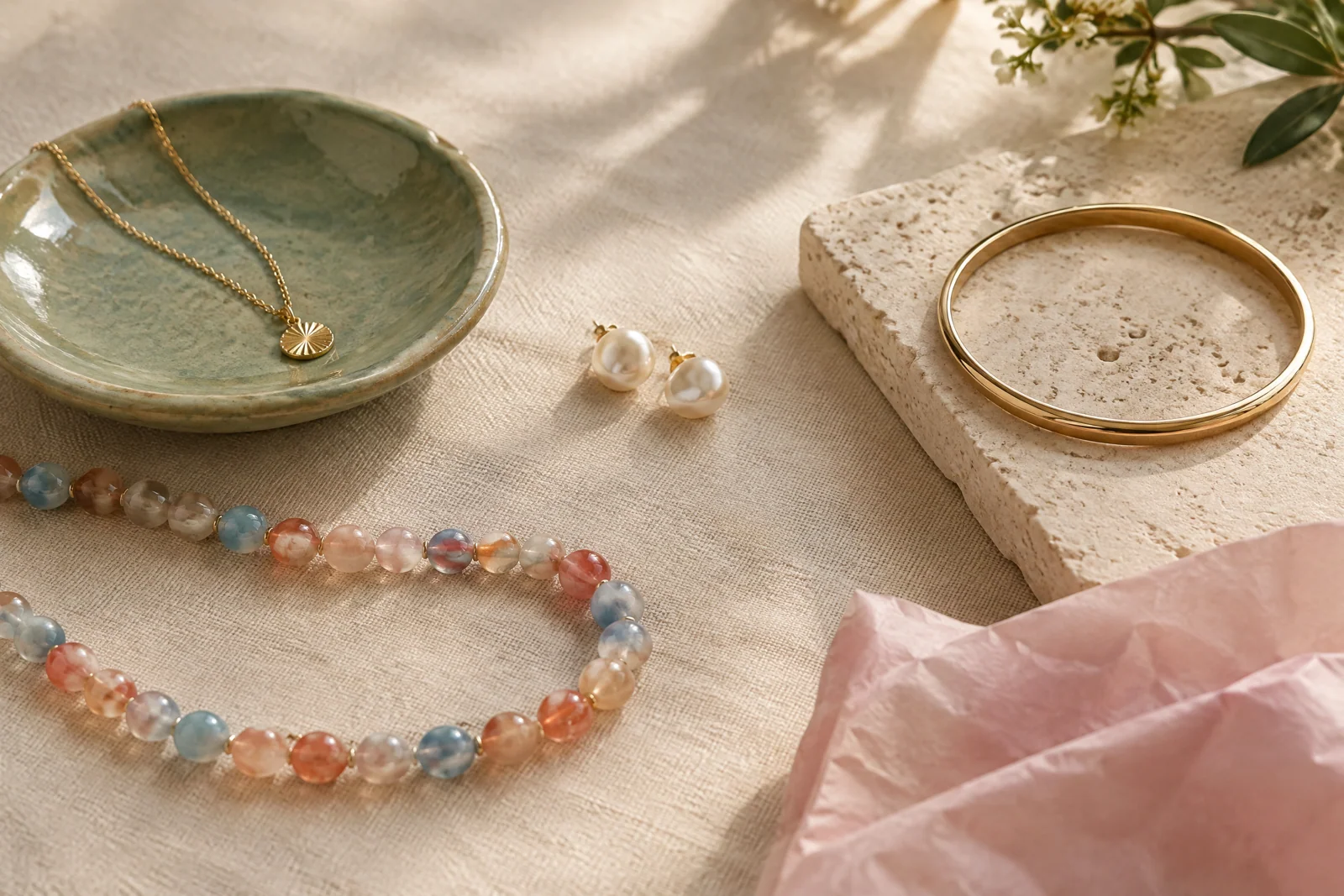
Think about what the recipient actually reaches for. Do they wear fine chains, colorful beads, a single expressive pendant, or no necklace at all? Notice the scale of their usual pieces: a petite charm may blend naturally into a delicate everyday look, while a larger pendant has more visual presence. There is no rule that small has to mean subtle; a bright cord or a vivid color can make a modest motif feel spirited. Charm jewelry should follow their natural scale.
Color can help a meaningful piece feel at home in an existing wardrobe. If their clothes lean toward cream, denim, and soft neutrals, a warm gold tone or gentle color accent can be an easy bridge. For someone who loves saturated shades, look for contrast rather than trying to match every outfit exactly. When you are uncertain about metal preferences, notice the jewelry they wear near the face and hands, but do not treat one observation as a guarantee. Some people enjoy mixing finishes; others prefer a consistent look. A gift should be easy to wear, not a request to change their style. That is especially true of charm jewelry.
For a concrete reference, the catalog includes Lucky Fish, a petite sculptural fish pendant on a red cord, described as cord and 18k gold-plated stainless steel, with an approximately 42 cm length plus a 5 cm extender. The fish is about 27 mm. Its red cord gives the motif a lively, casual quality. Another example is Mini Sun, described as a small 18k gold-plated stainless-steel sun charm on a 14k gold-fill chain; the chain is approximately 40 cm and the sun about 10 mm. Those descriptions illustrate different proportions and materials, not a prescription for what your recipient should choose. Use them as practical references when comparing charm jewelry.
Consider how the jewelry fits into their existing routine, too. A person who wears necklaces daily may enjoy a pendant they can leave on a favorite chain, while someone who changes accessories often may prefer a piece that has a clear standalone personality. If you are still exploring, compare silhouettes in the necklace collection and bracelet collection. Look for a familiar scale and neckline preference before focusing on symbolism alone. The right motif in the wrong format can remain in a jewelry box; a thoughtful match should feel like something they might choose for themselves. A charm jewelry gift works best when the form already feels familiar.
Choose the format, materials, and fit with care
A charm can appear on a necklace, bracelet, or another accessory, and the recipient’s preferences should guide the format. For charm jewelry, the way it sits and moves matters as much as its symbol. Necklaces are an intuitive option when they already wear pendants. Bracelets can feel more discreet, but check whether the person likes something on their wrist and whether they prefer a close or relaxed fit. If you cannot confirm sizing, a necklace with an extender or a flexible design may reduce guesswork, but always read the individual product details rather than assuming every style adjusts.
Material descriptions matter because “gold” can refer to different constructions. Gold-plated describes a surface layer of gold over another material; gold-fill is a distinct material category and should not be used as a synonym for plating. Stainless steel is not the same thing as a precious-metal core. Read the listing closely and repeat its language accurately if you are describing the gift. Clear descriptions make charm jewelry easier to choose thoughtfully. The examples above combine materials in different ways, so avoid assuming the chain, charm, and findings are all made from one material. If the recipient has known sensitivities, ask what materials they can comfortably wear; a product description alone is not a guarantee about an individual’s experience.
Think about weight and movement as well as appearance. A statement-sized charm may catch the eye but could feel less at home for someone who prefers barely-there jewelry. Check measurements in the listing and compare them with an item they already wear. The same measurement can look very different depending on where a piece sits and how the wearer likes to dress. Scale is a quiet but important part of charm jewelry. For help weighing silhouette against outfit, the necklace collection is a useful place to compare lengths and pendant proportions.
Care should reflect the specific combination of materials. As a cautious default, remove jewelry before applying perfume or lotions, and follow the product’s own care information. Avoid assuming that every charm can be soaked, polished with the same cloth, or cleaned in an ultrasonic device; mixed materials, coatings, cords, and delicate components may need different handling. If giving the piece, include a simple note to store it dry and separately from items that could scratch or tangle with it, unless its care instructions say otherwise. Practical consideration is part of the gift: it helps the recipient enjoy the piece without promising it is waterproof, hypoallergenic, or maintenance-free. A little clarity helps charm jewelry stay an easy pleasure.
Make the presentation personal and pressure-free
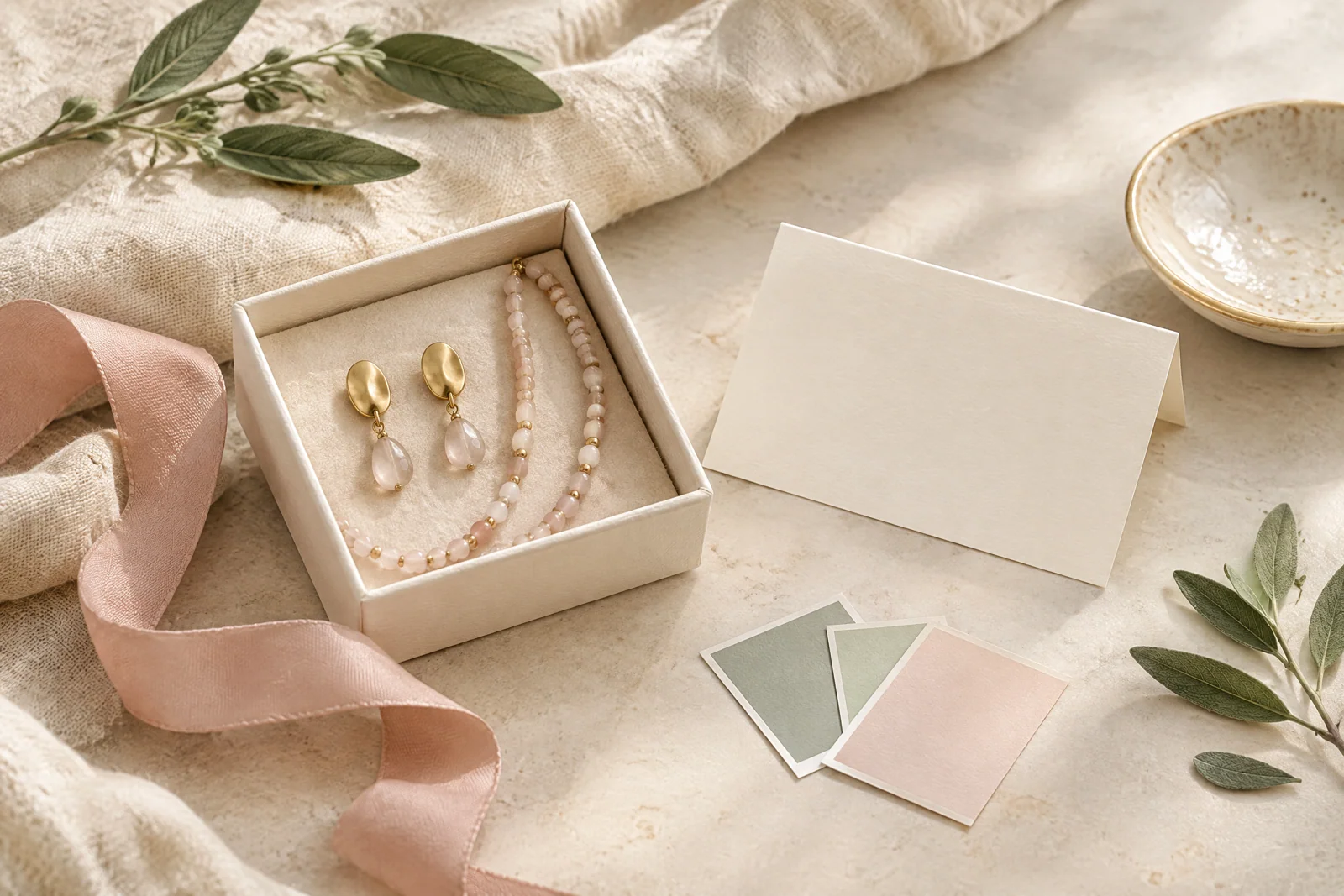
Presentation can turn a lovely object into a memory without adding elaborate packaging. Write a few lines that name the connection: why you chose that particular motif, a moment it recalls, or a quality you appreciate in the recipient. Specificity matters more than length. “The little sun reminded me of our long afternoon at the beach” offers a real story; “this will bring you luck forever” makes a promise the object cannot keep. Give them room to decide what the piece means to them, too.
If you are choosing for a birthday or another occasion, consider whether the recipient enjoys surprises or prefers to have a say. For someone with a defined style, asking a low-key question about chain length or color can be more considerate than preserving every detail as a surprise. If their taste is hard to read, a gift card or an invitation to choose together may be more thoughtful than guessing. The point of charm jewelry is connection, not the risk of making the person feel obligated to wear something that does not suit them. The best charm jewelry gift feels chosen, not assigned.
Resist the urge to add a second or third symbolic piece just to make the gift feel substantial. One clear motif can carry more personality than a cluster of unrelated meanings. If you do want to pair pieces, choose a simple companion that supports rather than competes with the charm. Keep the balance in proportion to how the recipient dresses: a colorful pendant may be the focal point, while smaller earrings or a simple bracelet can complement it without turning the gift into a styling assignment.
Finally, keep the practical details honest. Confirm the exact product description and measurements, and avoid making claims about delivery timing, returns, or material performance unless those details have been verified for the order. For questions about a specific piece, contact the Duddingtons team directly. A thoughtful choice is not necessarily the most elaborate or expensive one. It is the one that says, with a light touch, “I noticed this about you.” Choose the motif for the person, match its scale and color to their everyday life, and let the story in your note complete the gift.
Related reading
For more ways to make a present feel personal, read 10 Thoughtful Jewelry Gift Ideas for Different Personalities, How to Choose Jewelry for Someone Else, and A Guide to Meaningful Birthday Jewelry Gifts.