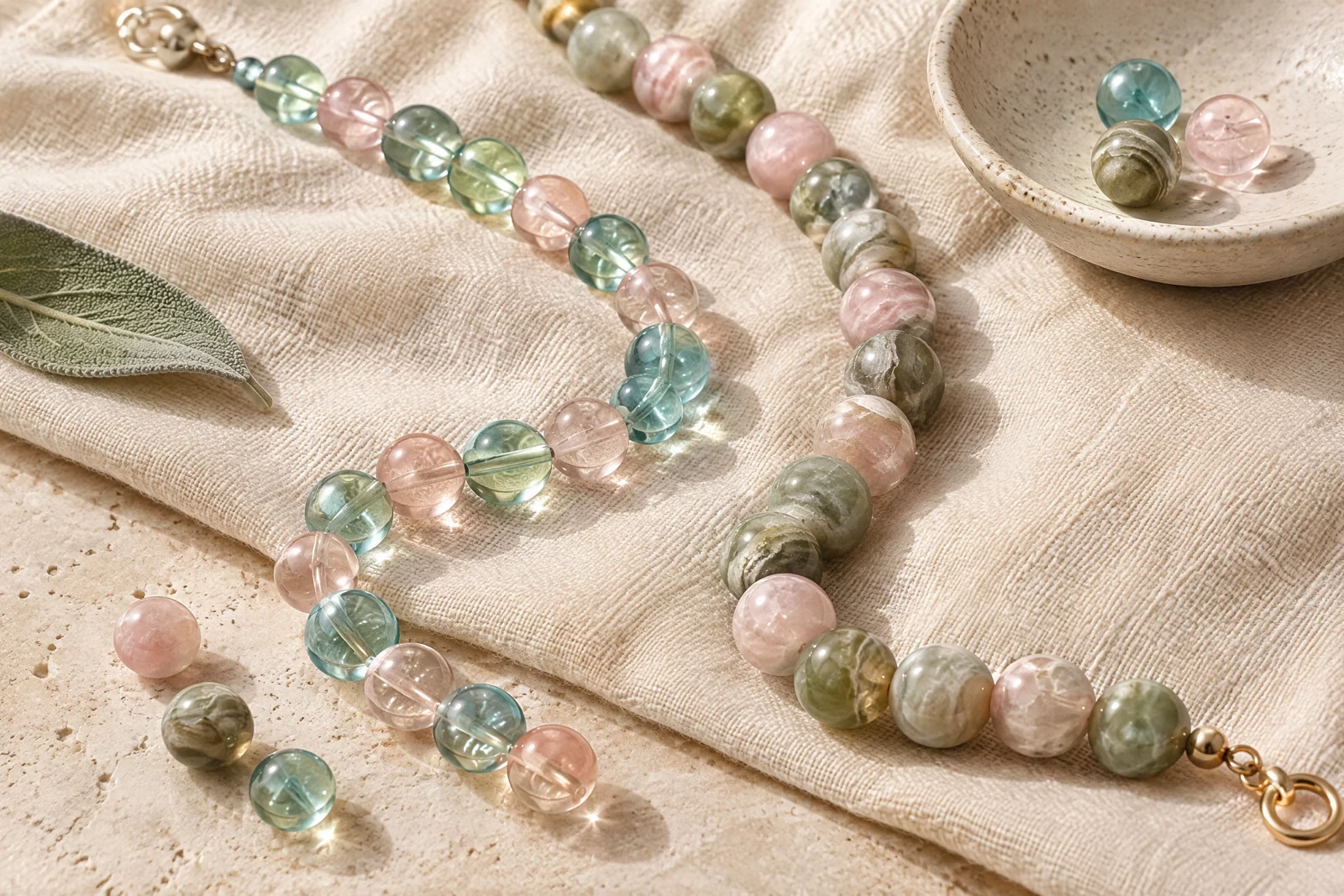
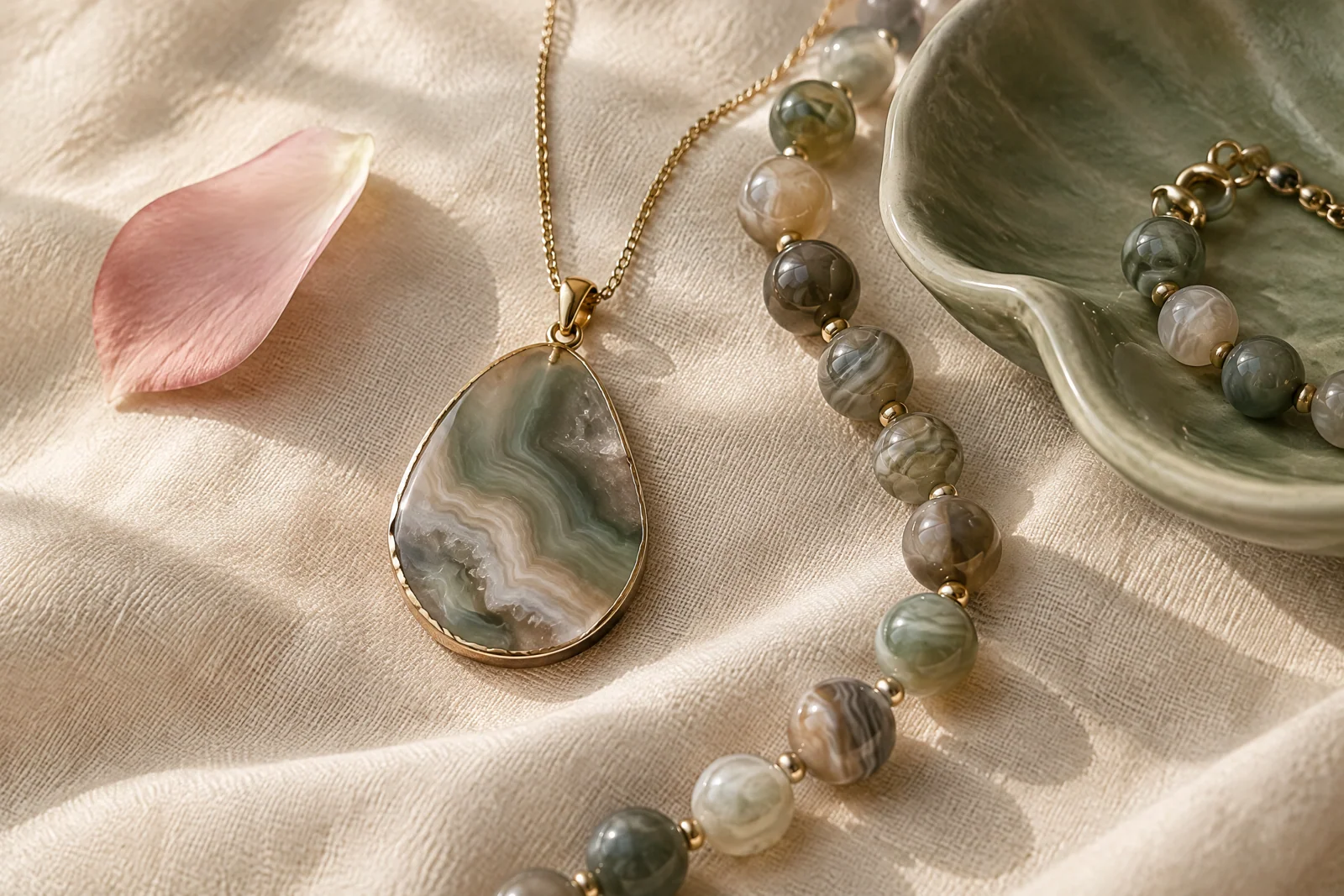
Some stones make an outfit through sparkle; agate jewelry often does it through color and pattern. A single bead can hold cloudy layers, fine stripes, or a soft change from sage to gray, giving agate jewelry the feel of a small found object rather than a uniform accent. That variation is the pleasure: each piece has its own visual rhythm, and it can be surprisingly easy to wear when you let the stone lead.
Gem-A describes agate as a type of chalcedony that often, though not always, shows concentric color bands; straight bands and less obvious patterns also occur. That variety is useful at the wardrobe level. Instead of asking whether a stone is “dressy,” notice its dominant color, contrast, scale, and finish. Those four clues can help you place agate jewelry with a crisp shirt, a printed dress, or an everyday knit—without making the rest of the look compete.
Read the color and pattern before you style
When styling agate jewelry, start by looking at the stone as a tiny palette. A green agate may lean cool and gray, warm and olive, or pale and almost milky. Brown, cream, and charcoal may appear as bands or cloudy areas within the same bead. Pick the shade that feels most at home beside the clothes you already reach for, rather than choosing by a color name alone. Agate jewelry can shift in appearance from one piece to another, so a product photograph is a starting point, not a promise that every natural pattern will look identical.
Then notice how busy the pattern feels from arm’s length. Fine banding in agate jewelry reads like texture; high-contrast rings or large swirls behave more like a print. If the stone has a clear, dramatic pattern, give it breathing room against a solid top or a simple neckline. If its colors blend softly, it can sit comfortably with subtle stripes, a small check, or a floral print that shares one of its tones. The aim is not to match every stripe, but to keep the overall scale calm.
Surface and shape matter, too. A polished round bead catches light in a compact, regular way; a larger donut or freeform pendant makes the stone’s outline part of the look. Glossy agate can feel crisp beside linen or cotton, while a corded pendant has a more relaxed, outdoorsy mood. These are styling impressions, not rules: use the setting, scale, and finish of agate jewelry as cues for what to pair next.
For an easy agate jewelry color combination, set green or gray agate against cream, soft white, navy, denim, or charcoal. Blush and muted coral can warm a cool green; camel and chocolate can bring out earthy bands. If the stone is red or honey-toned, try slate blue, olive, or a clean white shirt to create contrast. When a bead already contains several colors, repeat just one in the clothing or another accessory. That small echo makes agate jewelry feel considered without turning the outfit into a color-matching exercise.
Choose one focal point, then build around it
For everyday agate jewelry styling, decide which piece should speak first. A substantial pendant or an expressive strand usually needs little competition. Let it rest over a plain tee, an open-collar shirt, or a simple dress; keep other jewelry fine or leave it off. With a shorter, more subtle strand, you can add a delicate chain, but give the layers different visual weights and enough space to read separately. A patterned stone is already doing detail work.
Neckline and length are practical guides. A short beaded necklace draws attention toward the collarbone and works naturally with an open neckline or a crew neck that leaves a little room above the beads. A longer cord pendant can fall over a high-neck top or a simple dress, where its vertical line breaks up a block of fabric. If a pendant keeps catching on a collar or disappearing beneath a lapel, adjust the neckline before adding another necklace. Browse the necklace collection with length and neckline in mind, not only color.
In the Duddingtons catalog, the Etta necklace is described as a large green agate donut bead on a long cord, with the cord measuring 80 cm and the bead about 50 mm. That generous scale makes it a natural solo focal point over a plain shirt or a simple knit. The Amy earrings take a different approach: sage-green agate multi-bead drops with silver-plated mixed-metal details, at an approximately 30 mm drop. If you choose a noticeable earring, let it carry the color near your face and keep the neckline comparatively uncluttered; this keeps agate jewelry in focus. You can explore similar shapes in earrings.
When combining metals, treat them as a supporting color rather than a strict matching test. Silver details can feel cool with gray-green stones and crisp whites; gold-toned accents can warm olive, cream, and honey. Either can work alongside agate jewelry because the stone itself is varied. One repeated metal note—a small hoop, a slim ring, or a clasp—can tie the look together. If you prefer a more collected feel, mixing finishes is fine; keep the number of competing focal details low.
Make agate work with real-life outfits
For a weekday uniform, pair agate jewelry in the form of a patterned pendant with a solid shirt and one easy layer, such as a cardigan or jacket. Keep the silhouette simple and let the stone interrupt the clean line. A bead strand can also soften tailored clothes: try it with a blazer over a plain top, choosing a color from the stone that repeats in your bag, belt, or shoes. This small connection makes the outfit feel pulled together without requiring a full matching set.
For relaxed weekends, use texture as your bridge. Agate jewelry looks at home beside cotton, denim, linen, and soft knits because those materials do not fight its natural-looking surface. A pale green strand with a white shirt reads fresh; darker gray or brown stones can ground a light dress. With a strong print, select one shade from the fabric and look for a stone that echoes it quietly. Or reverse the balance: wear a vivid agate against a single-color outfit and skip a second patterned accessory.
Think about proportion as well as color. Petite beads can add a close-to-the-neck accent without taking over a detailed collar. Larger beads and pendants are easier to read when the clothing has a clear, uninterrupted area behind them. If you like stacking, mix scale rather than piling similar large pieces together: a substantial agate necklace might pair with a narrow bracelet, while a small bead strand can sit beside a fine chain. Keep movement comfortable, and check that clasps or edges do not rub against one another.
Color can also shift the mood of agate jewelry. Sage, gray, and cream feel understated; teal or blue-gray can add a cool note; rust, amber, and red bring warmth. These are useful styling directions, not fixed meanings, and the same stone can look different in daylight and indoor light. When shopping, compare the product description and images carefully, then consider whether you would wear the dominant shade with at least two outfits. For more ways to work color into a rotation, browse the broader collections and look for pieces that share a tone rather than an identical pattern.
A simple three-step formula keeps agate jewelry personal: choose one piece, pick a neutral or a color already present in its pattern, then add only one supporting detail. That detail could be a metal accent, a second fine chain, or a small earring—not all three by default. If the outfit feels too busy in the mirror, remove one element before changing everything. Agate jewelry is most appealing when its individual pattern has room to be seen.
Care gently, especially when materials are mixed
Agate is a stone, but a finished piece may also include cord, metal, glue, beads, or other components. Care should follow the most delicate part, not a broad assumption that all jewelry can be treated alike. After wearing, wipe the stone gently with a soft, dry cloth to lift away everyday residue. If more cleaning seems necessary, check the maker’s material guidance first and use a lightly damp cloth only where suitable; dry the piece promptly and completely. Avoid soaking a mixed-material necklace, since moisture can affect cord, joins, or metal finishes.
Keep perfume, hairspray, sunscreen, and lotions from building up on the surface by putting jewelry on after those products have settled and removing it before bathing, swimming, or exercise. This is a cautious routine for a mixed-material piece, not a claim that every agate is fragile or that every finish reacts the same way. Do not assume ultrasonic cleaning or household cleaners are suitable. A soft brush may help around a setting only if the construction and care instructions allow it; when uncertain, stay with a gentle wipe.
For storage, lay strands flat or fasten them loosely in a pouch so beads are not knocked against harder items. Keep heavier pendants from pulling on delicate cords, and separate pieces that could scratch one another. Before wearing, glance at the clasp, cord, and any visible settings. If a component looks loose or damaged, pause rather than pulling on it. These small habits help preserve the whole piece, not just the polished stone.
When a listing identifies a specific stone or mixed material, use that description as your guide and ask for clarification if an important detail is missing. Color treatments and trade descriptions can vary across the jewelry market, so avoid assuming that every agate is untreated or that two stones with similar colors have identical origins. The most useful choice is the one whose documented materials, scale, and palette suit how you actually dress. A thoughtfully chosen piece of agate jewelry can move from a weekday shirt to a weekend layer simply because its color feels like yours.
For a closer look at the gemological background, see Gem-A’s overview of chalcedony and agate varieties, including its discussion of how color banding can vary. Read it as a guide to the material, while keeping the care instructions for your individual piece in view.
Related reading
Continue exploring materials with our guides to gold-plated versus gold-filled jewelry, glass beads and gemstone beads, and freshwater and faux pearls.