A favorite necklace can bring together glass beads, a plated clasp, a cord, and a small shell charm; earrings may pair resin with metal findings. That variety is part of the pleasure, but it means mixed-material jewelry does not have one universal cleaning rule. A method that suits one component may be too much for another. The easiest principle is also the most useful: identify the most delicate part, then let it set the pace for the entire piece. In practice, that usually means less water, less rubbing, and more attention to where moisture or residue can collect. You do not need a complicated kit or a vigorous polish to keep a piece looking cared for. A few careful habits—checking the materials, wiping gently after wear, and storing components so they do not scrape one another—make a sensible routine. When a product description or maker gives specific care directions, follow those first. That is a practical starting point for mixed-material jewelry.
Why the most delicate component sets the rules
A mixed piece behaves as a combination, not as a single block of material. Its beads, stringing, connectors, surface finish, and decorative accents meet at small contact points. Liquid can linger around a knot or under a setting; a rough cloth can catch a cord; friction can scuff a glossy surface. Even when each material seems sturdy on its own, the join between parts may deserve extra care. This is why it is better to avoid choosing a cleaning method just because the most visible component appears durable. For mixed-material jewelry, inspect joins as carefully as surfaces.
Start by reading the item description and noting every material named, including the parts that sound like hardware. “Gold” may describe a color or a plated finish, while gold-filled and solid gold describe different constructions; do not treat those terms as interchangeable. Likewise, a piece described as glass with plated mixed-metal details is not simply “glass jewelry.” For example, Duddingtons describes Jovie as rondelle beads with gold-plated details and 14k gold-fill, while Misty combines resin and gold-plated mixed metal. Those descriptions tell you to consider more than one surface before reaching for a cleaner. This habit makes mixed-material jewelry easier to understand.
Then make a quick visual check. Look for threaded or knotted sections, a cord or ribbon, a coating or plated accent, a pearl-like or shell detail, and any area that appears loose, chipped, or worn. This is not a test of quality; it is a way to notice which area could be most affected by moisture, abrasion, or tugging. If you are unsure what a material is, do not guess based on color or shine. Choose a dry, gentle wipe and ask the seller or maker for material-specific guidance before using a liquid product. It is a useful first pass for mixed-material jewelry.
- Surface and finish: plated components can be affected by repeated rubbing and contact with products.
- Porous or flexible parts: cords, knots, and some natural or composite accents may retain moisture or soil.
- Small connections: clasps, jump rings, and threaded points can trap residue or take stress when pulled.
Thinking this way also helps when browsing a jewelry and accessories collection: a clear material description is useful not only at purchase, but later when you want to care for the piece confidently. Clear descriptions help make mixed-material jewelry care practical.
A gentle clean, step by step
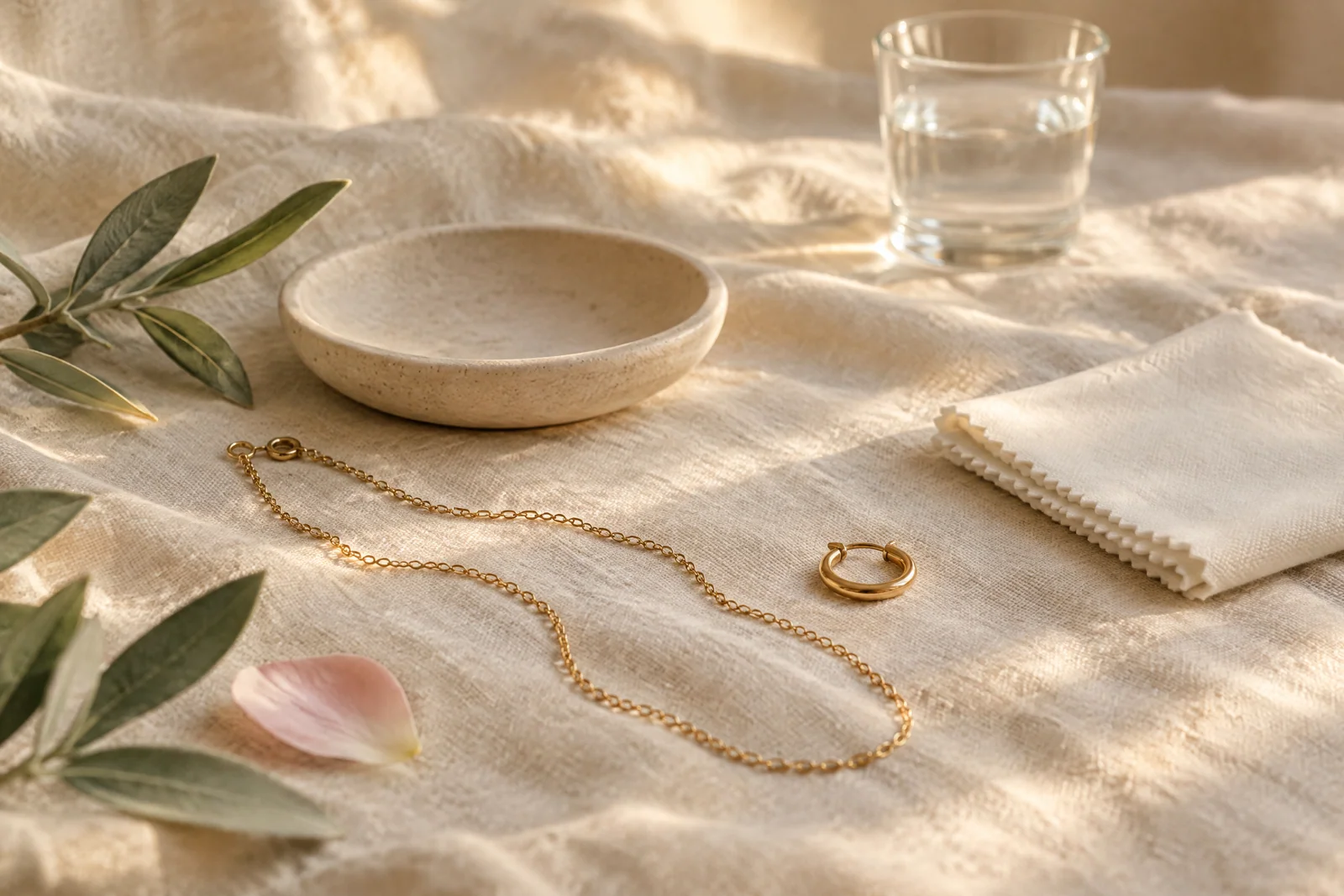
For routine attention after wearing, begin with a clean, soft, dry cloth. Support the piece in your hand rather than holding it by a single strand, charm, or clasp. Lightly wipe accessible surfaces to lift fingerprints, skin oils, or everyday dust without buffing aggressively. Use a separate clean area of the cloth as needed so that you are not rubbing loosened residue back across the piece. Pay particular attention to a clasp and the spaces around beads, but do not pull at a knot or try to force a cloth through a narrow opening. For mixed-material jewelry, begin with a dry, gentle touch.
If a dry wipe is not enough, pause before introducing water. Check the item’s care instructions and consider whether every component can tolerate even a damp cloth. With mixed-material jewelry, “a little water” is not automatically harmless: moisture can sit in a cord, between beads, or around a join. Where instructions permit, use a barely damp corner on the specific area that needs attention, keeping it away from vulnerable sections. Follow with a dry cloth immediately, then let the piece air-dry fully on a clean surface before putting it away. Do not soak the whole item as a shortcut. With mixed-material jewelry, limit moisture to what instructions allow.
A practical routine is intentionally modest: Keep mixed-material jewelry care modest and consistent.
- Inspect first. Check the clasp, connectors, knots, coating, and decorative elements. Stop if something is loose or damaged.
- Wipe dry. Use a soft, lint-free cloth with light pressure, working around rather than tugging on joins.
- Spot-clean only if appropriate. Follow the maker’s instructions and keep moisture localized; do not improvise with household cleaners.
- Dry and reassess. Let the piece dry completely, then check for residue or a change in appearance before storing it.
Avoid sprays, dips, abrasive pastes, and polishing compounds unless the maker explicitly recommends a product for all of the materials in that item. Fragrance, lotion, hair products, and household cleaners can leave films or interact with some finishes, so a useful habit is to put jewelry on after getting ready and remove it before applying products or cleaning. Do not use an ultrasonic cleaner or a polishing cloth designed for one metal on an unknown combination. If you cannot verify compatibility, a dry wipe is the safer starting point. This helps mixed-material jewelry avoid unnecessary friction.
Different products may call for different directions, even when they look similar. The catalog describes Lucky Fish as a cord necklace with an 18k gold-plated stainless-steel pendant; that is a distinct combination from a beaded strand with plated findings. Material details help you ask a specific care question instead of assuming one technique works across every necklace. For more options, browse the necklace collection and check the description of the individual piece. For mixed-material jewelry, check the individual product instructions.
Care for the combination, not just the surface
Once you have identified the components, match your habits to the combination. The most delicate part may not be the largest or most colorful. A small cord, a knot, a shell, or the finish on a metal accent can matter as much as the main bead or pendant. The guidance below is deliberately cautious: material names cover different constructions, and an item’s own care directions should take precedence. That is central to caring for mixed-material jewelry.
Beads with plated details
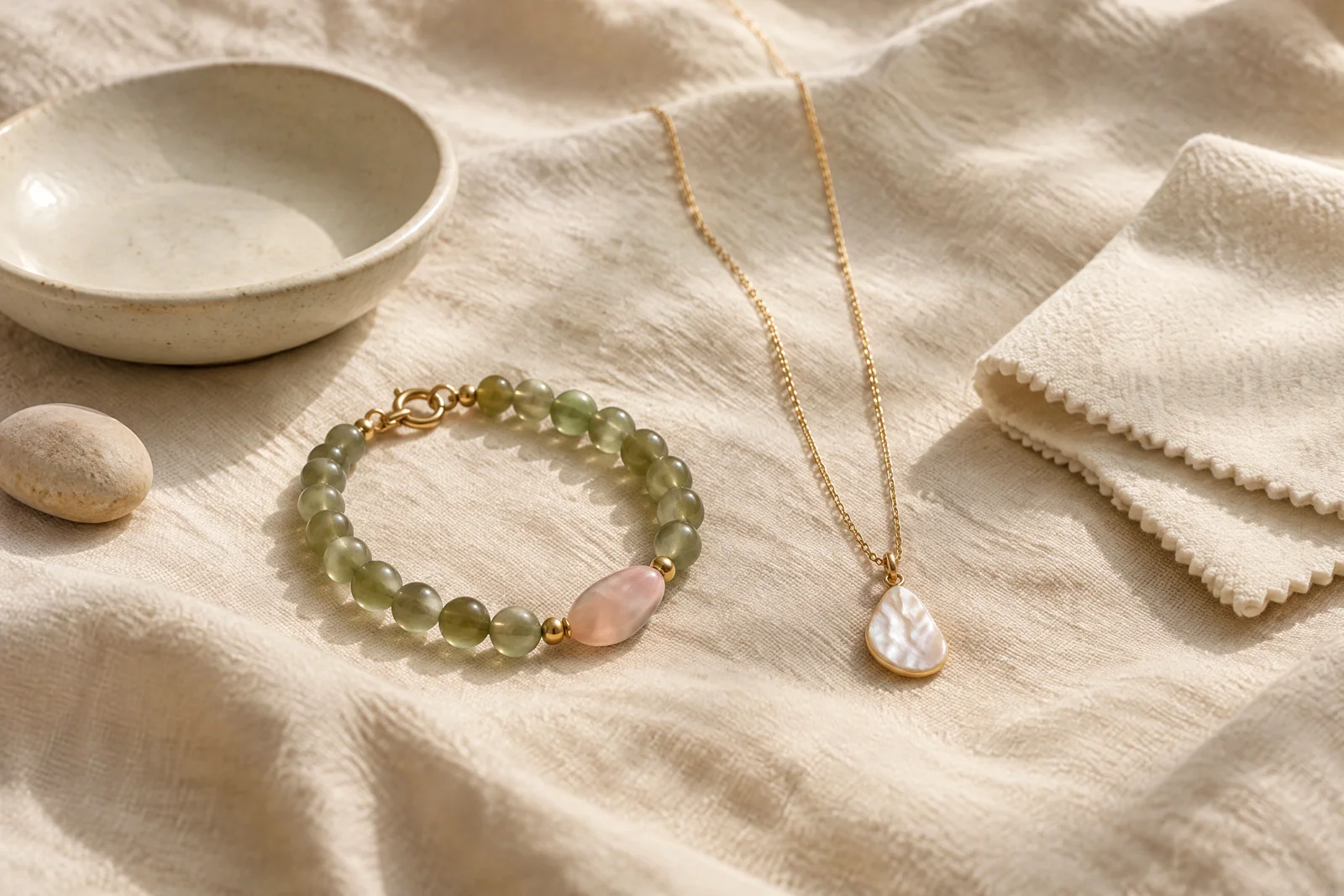
For a beaded necklace with a plated clasp or spacer, use a soft dry cloth rather than immersing the strand. Avoid pulling beads apart to reach the metal, and keep cleaners away from thread, knots, or elastic unless the maker says otherwise. Let the piece rest flat or hang only if its construction is intended to do so; do not stretch it by its clasp. If the metal detail is tarnished or the finish looks changed, stop polishing and ask for advice rather than using a stronger compound. You can explore styles in the necklace collection while keeping each item’s particular material list in view. Keep mixed-material jewelry away from vigorous polishing.
Cord, leather, and knotted sections
Flexible parts are easy to overlook because the decorative pendant draws the eye. Keep cord and knots as dry as practical, avoid twisting or stretching them while wiping, and do not hang a heavy piece by a delicate strand for long periods unless its design calls for that storage. A cord that has become damp should be allowed to air-dry completely away from direct heat. Do not apply oils or conditioners just because a cord looks dry; the material and finish may not suit them. If a strand is fraying or a knot has shifted, avoid wearing it until you have checked whether it needs repair. For mixed-material jewelry, treat the cord as its own material.
Resin, shell, faux pearls, and enamel
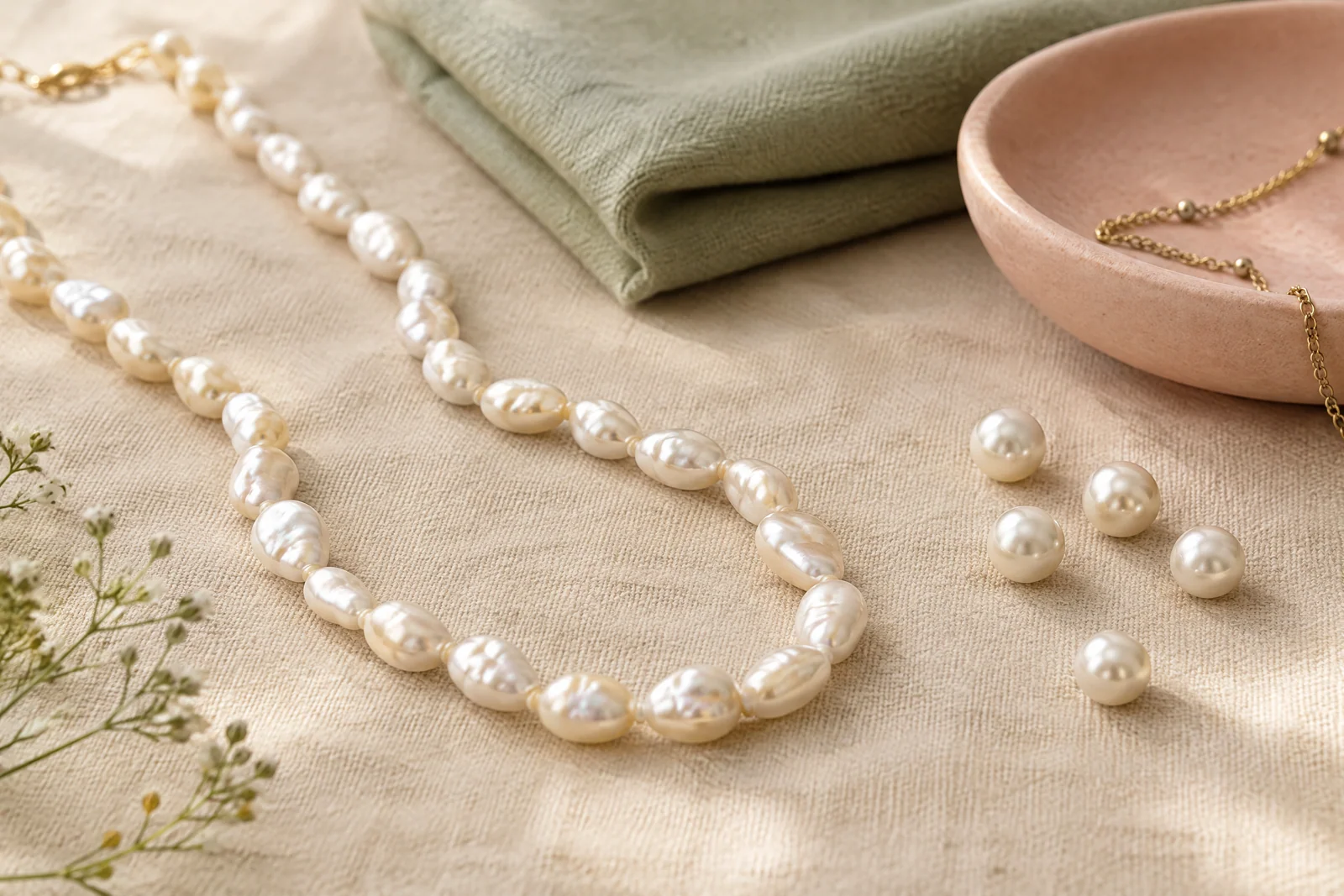
Decorative accents can be sensitive to scratching or harsh cleaning, and shell, faux pearls, enamel, and resin are not interchangeable materials. Wipe rather than scrub, keep pieces separate from hard or sharp objects, and avoid prolonged contact with liquids or strong household products. Do not assume a pearl-like surface is a natural pearl or apply pearl-care advice to a faux pearl without checking the description. If there is visible lifting, cracking, or a rough edge, do not try to smooth it with an abrasive cloth. For earrings that combine a decorative element and metal fitting, clean accessible surfaces gently and do not force a cloth into the hinge or setting. Gentle handling is especially useful for mixed-material jewelry.
Gold-colored components and mixed metals
Use the exact material wording supplied for the metal part. Gold-plated, gold-filled, and solid gold are different descriptions; a gold-colored surface alone cannot tell you which applies. Treat plating with a light touch: repeated abrasion can wear a surface, so avoid vigorous buffing and metal polish unless the maker specifically approves it. If a piece combines gold-tone and silver-tone details, do not use a cleaner intended for one finish across the entire design. A soft cloth and careful separation during storage are more useful than trying to make every component shine at once. For mixed-material jewelry, one finish need not dictate treatment for all.
Store thoughtfully and know when to stop
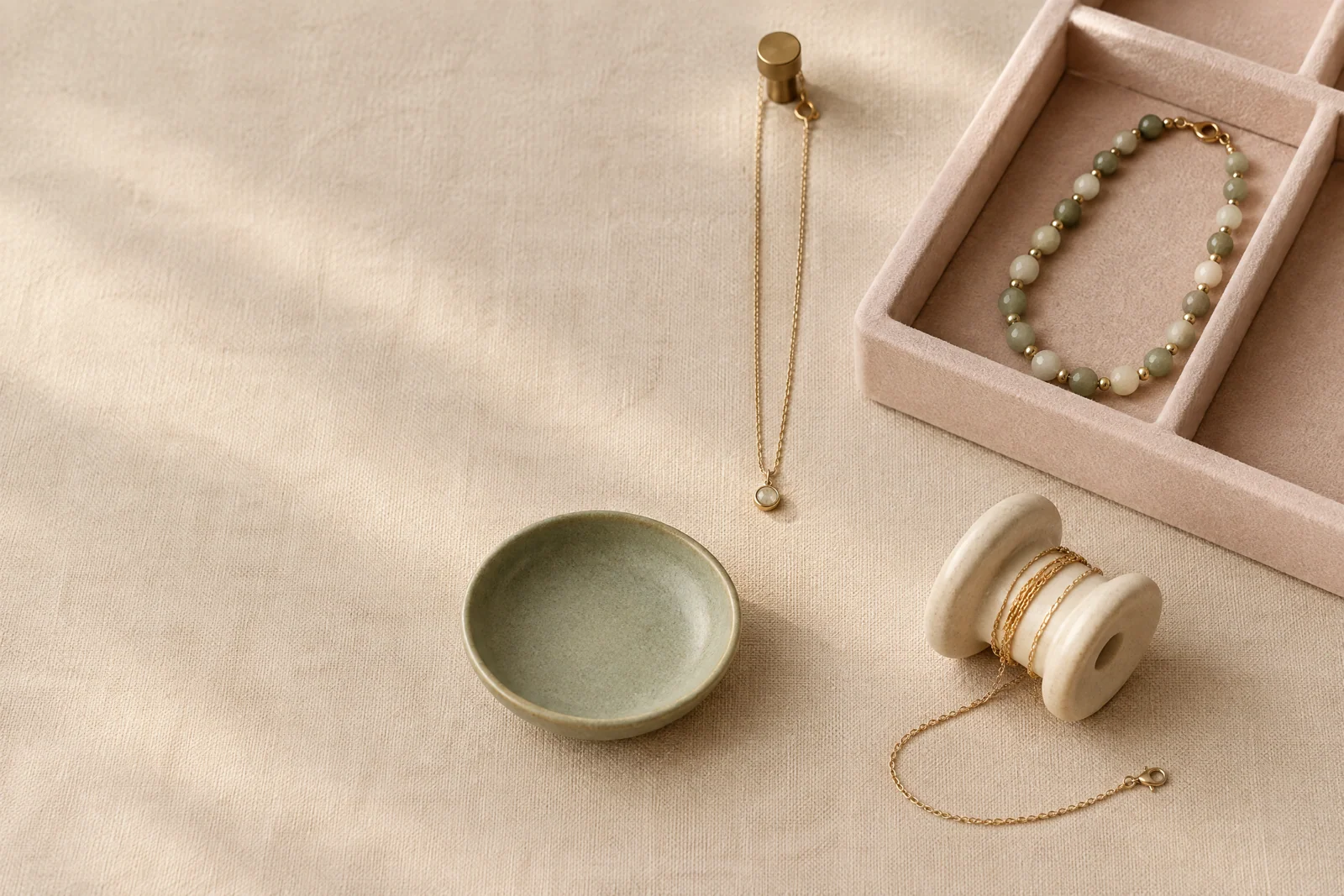
After the piece is completely dry, give it a place where its components cannot rub against harder jewelry. A soft pouch, lined compartment, or individual section of a jewelry box can reduce tangles and surface contact. Close clasps when practical, and lay out a cord or delicate chain without tight bends. Keep a beaded piece from being crushed under heavier items, and separate charms or earrings with protruding details so they do not press into beads, resin, or shell. Avoid leaving jewelry in a damp bathroom or in direct sun for long periods; a cool, dry storage spot is a sensible default. Separate storage is simple mixed-material jewelry protection.
Before storing, take a few seconds to check the clasp, connector rings, knots, and any small accents. A loose connection is easier to notice before a piece is tangled with others. If you see a split cord, a missing bead, a flaking or lifting finish, or a crack, set the piece aside rather than trying to clean through the problem. Cleaning cannot repair a structural issue, and additional rubbing or pulling may make it worse. Ask the retailer or maker about appropriate care or repair options; if a particular material or finish is uncertain, include the product name and describe the affected area. Regular checks help mixed-material jewelry stay ready to wear.
There is no need to make a mixed piece look freshly polished every time it is worn. The goal is simply to remove ordinary surface residue gently, keep the materials from being stressed, and notice changes early. A dry cloth after wear, a careful read of the material description, and separate storage will often be enough for routine upkeep. When in doubt, do less: skip the soak, skip the strong cleaner, and get item-specific advice before trying a treatment that cannot be undone. A light-touch routine makes mixed-material jewelry easier to enjoy.
Related reading
For more practical care ideas, read How to Care for Gold-Plated Jewelry Gently, How to Store Necklaces Without Tangling Them, and A Gentle Care Guide for Pearl and Faux-Pearl Jewelry.