Color can do more than finish an outfit; it can give a familiar piece a little wit, a focal point, or a memory of a particular place. That is the appeal of enamel jewelry: a smooth, saturated detail that holds its own beside metal, beads, pearls, or shell. The term covers a range of looks, though, and the word on a product page does not always tell you how a finish was made. A little material literacy helps you choose with confidence and care for what you wear.
Think of enamel jewelry as a color story as much as a material category. A tiny red heart can feel sweet and personal; a sea-blue hoop reads crisp and relaxed; a glossy accent on a larger pendant can turn a simple silhouette into the outfit’s punctuation. Here is how to understand the finish, choose colors that work with your wardrobe, and keep colorful pieces looking considered rather than overly precious.
What “enamel” can mean on a jewelry piece
In traditional vitreous enameling, powdered glass is fused to a prepared metal surface with heat. The Gemological Institute of America describes enameling as fusing glass onto metal, and distinguishes approaches such as cloisonné, champlevé, basse-taille, plique-à-jour, and guilloché. The Victoria and Albert Museum’s explanation of champlevé likewise describes glass fused to prepared metal; its example involves recessed areas in a metal plate filled with powdered enamel. These are useful ways to understand historic and studio techniques, but they are not a promise that every colorful detail sold as “enamel” was made in the same way. That distinction keeps enamel jewelry descriptions in perspective.
Retail descriptions may use terms such as “enamel,” “enamel coated,” or “enamel painted.” Those phrases can describe a visible finish without spelling out its chemistry or production method. A painted enamel charm, a coated hoop, and a fired glass layer may look similarly glossy at a glance, yet have different construction and care needs. So treat technique names as helpful only when the maker explicitly identifies the process. When details matter, look for the stated base metal and finish, and ask the seller rather than assuming that a color surface is glass fused at high heat. That is a practical habit when choosing enamel jewelry online.
That distinction matters when shopping for enamel jewelry. Enamel is the colorful finish, not a synonym for gold, silver, or a particular base metal. A piece can pair enamel with gold-plated mixed metal, sterling silver, brass, gold-fill details, shell, or pearls; those parts do not become enamel simply because they sit beside it. Read the full material description as a list of components. It is an especially useful habit with enamel jewelry displayed beside other colorful pieces. If an item combines several materials, care should be guided by the most delicate element and any specific instructions supplied for that item.
For example, the Duddingtons On The Beach earrings are described as real shells edged with silver and blue enamel-coated, gold-plated hoops. The shells vary in their markings, so each pair has its own natural detail. That listing is a concrete illustration of mixed materials—not evidence that all enamel is applied to shells, or that all enamel jewelry is made with one process. The small red heart on the Sweet Heart - Chain necklace, meanwhile, is described as enamel painted over brass and paired with a gold-plated silver chain and gold-fill details. Clear material notes help set realistic expectations.
Choose a color that feels like you
Because color is the first thing many people notice, start with the clothes and accessories you reach for often. If your closet leans toward cream, denim, navy, and warm brown, an enamel detail in cherry red or clear blue can act as a tidy focal point. If you wear prints or saturated colors already, a small piece in a related shade can echo one color in the pattern without competing with it. You do not need a perfect match; a repeated undertone or a deliberate contrast usually feels more natural.
For an easy introduction to enamel jewelry, try one strong accent at a time. A red charm against a white shirt, a blue hoop beside a striped top, or a green detail with a neutral knit gives the eye one clear landing place. The effect is especially useful when a piece is small: a 5-millimeter painted heart, like the Duddingtons Sweet Heart - Chain listing describes, offers a pinprick of color rather than a large block. Tiny accents often work well when you want personality without making the jewelry the entire conversation.
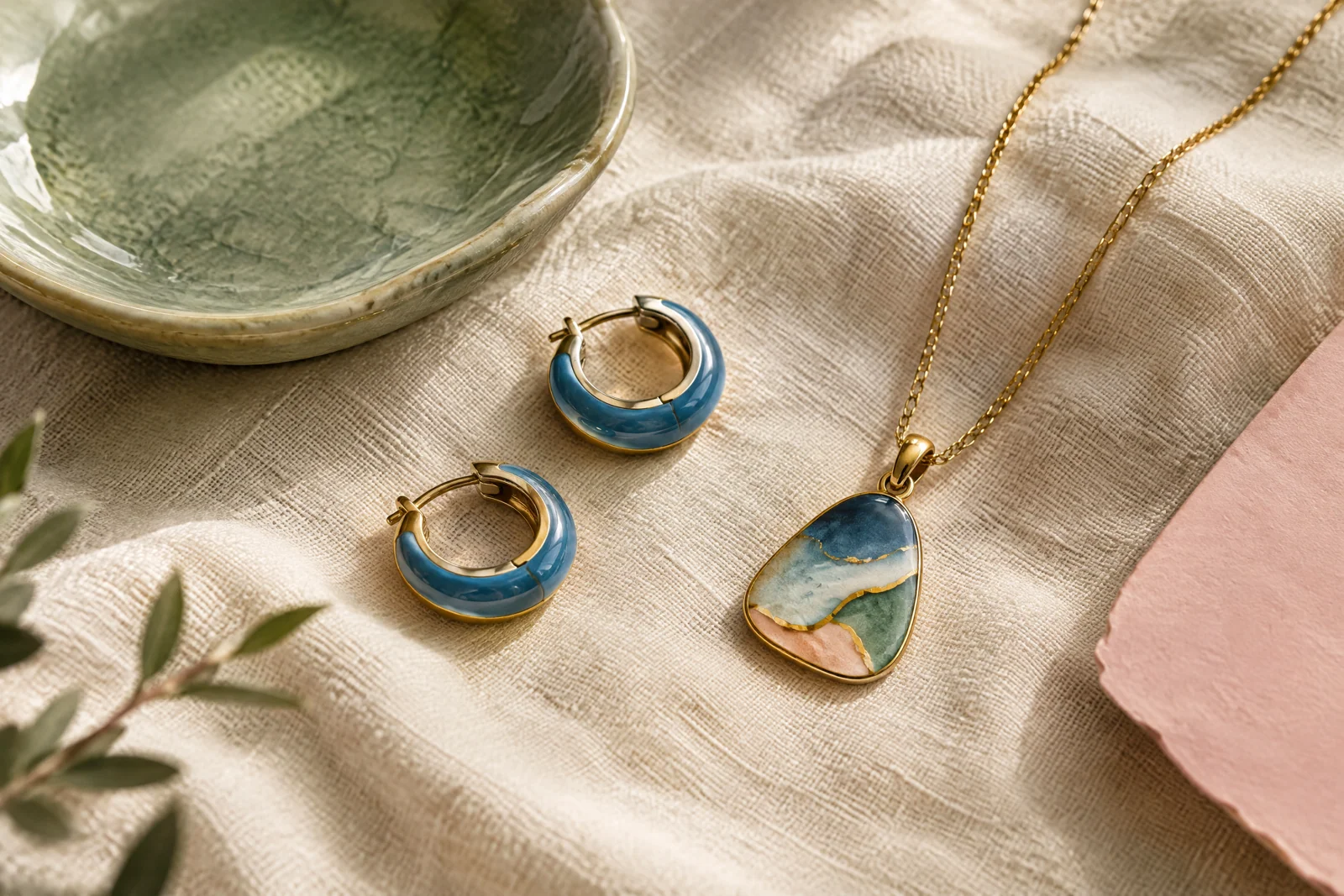
Scale shifts the mood, too, particularly with enamel jewelry. A compact colored stud reads like a punctuation mark; a wider enamel hoop is more graphic and can carry an otherwise simple outfit. For work or a layered look, keep the other shapes calm—perhaps a fine chain or a plain band—and let the colored piece lead. On a relaxed weekend, mix it with texture: linen, ribbed cotton, denim, or a soft sweater. The contrast between a smooth finish and a tactile fabric helps the color feel intentional.
Temperature can be a useful styling guide, not a strict rule, when choosing enamel jewelry colors. Warm reds, coral, and amber often sit comfortably with cream, camel, and gold-toned details; cooler blue and green shades can feel crisp with gray, white, or silver tones. Yet a deliberate mismatch can be more interesting than a match. Try a bright blue accent with warm brown, or a red charm with a pink shirt, and judge the whole outfit in daylight. For more ideas, browse the shapes and colors in our earrings collection or necklace collection.
If you are weighing enamel jewelry against something already in your jewelry box, think in proportions. A color accent does not need an identical partner. Repeating one shade in a bag, shoe, or print is enough to make it feel connected. Alternatively, keep every other accessory in a metal tone and let the enamel carry the color alone. This flexible approach makes enamel jewelry easy to wear well beyond one season or one occasion.
Wear it with balance, not rules
A helpful formula for wearing enamel jewelry is one color, one scale, one supporting texture. With a noticeable colored hoop, keep a necklace fine or skip it. With a small pendant, try a second chain of a different length, but leave enough space for each shape to be seen. If the jewelry is already glossy, a matte fabric or softly textured collar can create contrast. The point is not to follow a strict matching rule; it is to give each detail room.
Enamel jewelry paired with pearls or shell can feel especially fresh because the surfaces have different characters: polished color beside nacreous sheen or natural variation. Keep the color palette narrow—perhaps sea blue with ivory, or coral with soft gold—so the textures become the interest. A mixed-material piece already brings several details together, so you may not need to stack it with several other statement accessories. Let the design’s own materials do some of the styling work.
Layering enamel jewelry with metal is straightforward when there is a visual bridge. Repeat the gold tone in a small hoop or chain, or choose a silver detail that echoes cool blue. If you like mixed metals, let the enamel be the connector: one color can tie together warm and cool metal accents without requiring an exact match. Keep the shapes varied—one smooth hoop next to a fine chain, for instance—and avoid piling similar-sized focal pieces into the same small area.
Consider neckline and placement, too. A short colored pendant often sits neatly with an open collar, while a longer chain may work over a crew neck. Hoops draw attention to the face, so balance them with a simpler neckline or a restrained hair accessory. When dressing for a more formal occasion, a small enamel accent can add color without the formality of a large gemstone; for a casual day, a brighter shape can make a plain tee feel finished. Styling advice is personal, so use these as starting points rather than rules.
To keep a colorful piece in regular rotation, make it easy to find. Store it where you can see it, separated from items that might scratch or tangle with it. A dedicated tray or soft pouch can help protect enamel surfaces and keep the rest of a mixed-material design from rubbing against harder pieces. You can explore more outfit-minded ideas in the Duddingtons collections, then choose a shape that fits the way you actually dress.
Gentle care for colorful finishes
Care for enamel jewelry depends on the whole piece, not just the enamel. A necklace might combine a painted charm, a plated chain, and gold-fill accent rings; earrings could bring together enamel, plated metal, pearls, or shell. Avoid assuming that all these components tolerate the same cleaning method. Unless the maker gives specific directions, the safest first step is usually to remove the jewelry before bathing, swimming, exercise, or applying lotions and fragrance, then wipe it gently with a clean, soft, dry cloth after wearing.
Do not soak a mixed-material item or put it in an ultrasonic cleaner unless the seller or a qualified jeweler confirms that every component can tolerate that treatment. Avoid abrasive cloths, harsh household cleaners, and vigorous rubbing on a colored surface. If the finish has visible dirt, use a barely damp soft cloth only when appropriate for the other materials, and dry promptly; for a combination involving shell, pearls, cord, or an uncertain painted surface, keep moisture minimal and follow the item-specific guidance. When in doubt, ask before trying a stronger cleaner.
Inspect clasps and settings on enamel jewelry now and then, especially where metal meets a charm or bead. If an enamel surface is chipped, cracked, or lifting, stop wearing it until you can get advice; friction can worsen damage, and home polishing is unlikely to repair the finish. Store pieces separately so a hard edge, chain, or loose clasp does not knock against the color. Thoughtful handling matters more than a complicated cleaning ritual.
For a specific enamel jewelry care question, refer to the listing’s material notes or contact Duddingtons for guidance. To learn more about the shop, visit About Duddingtons. A colorful finish should be enjoyed in everyday life, while sensible care respects the materials and the way each piece is constructed.
Ultimately, enamel jewelry is at its best when color feels personal, not precious. Choose the hue that makes you smile, check what the finish is paired with, and wear it in a way that suits your own wardrobe. A small pop of blue, a playful red heart, or a glossy hoop can make an outfit feel like yours without requiring a new set of rules.
Related reading
Continue exploring materials with our guides to gold-plated versus gold-filled jewelry, glass beads versus gemstone beads, and freshwater pearls versus faux pearls.