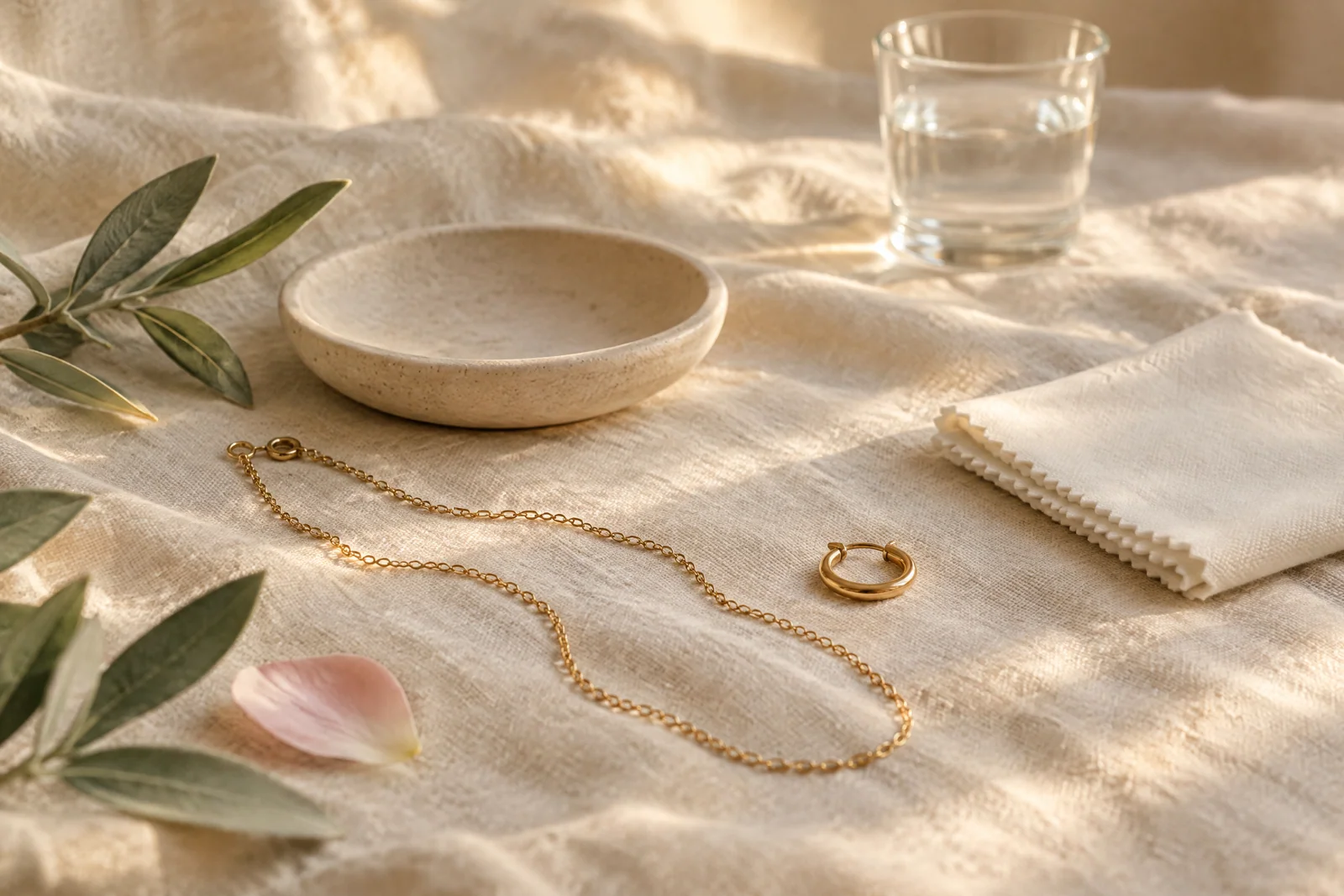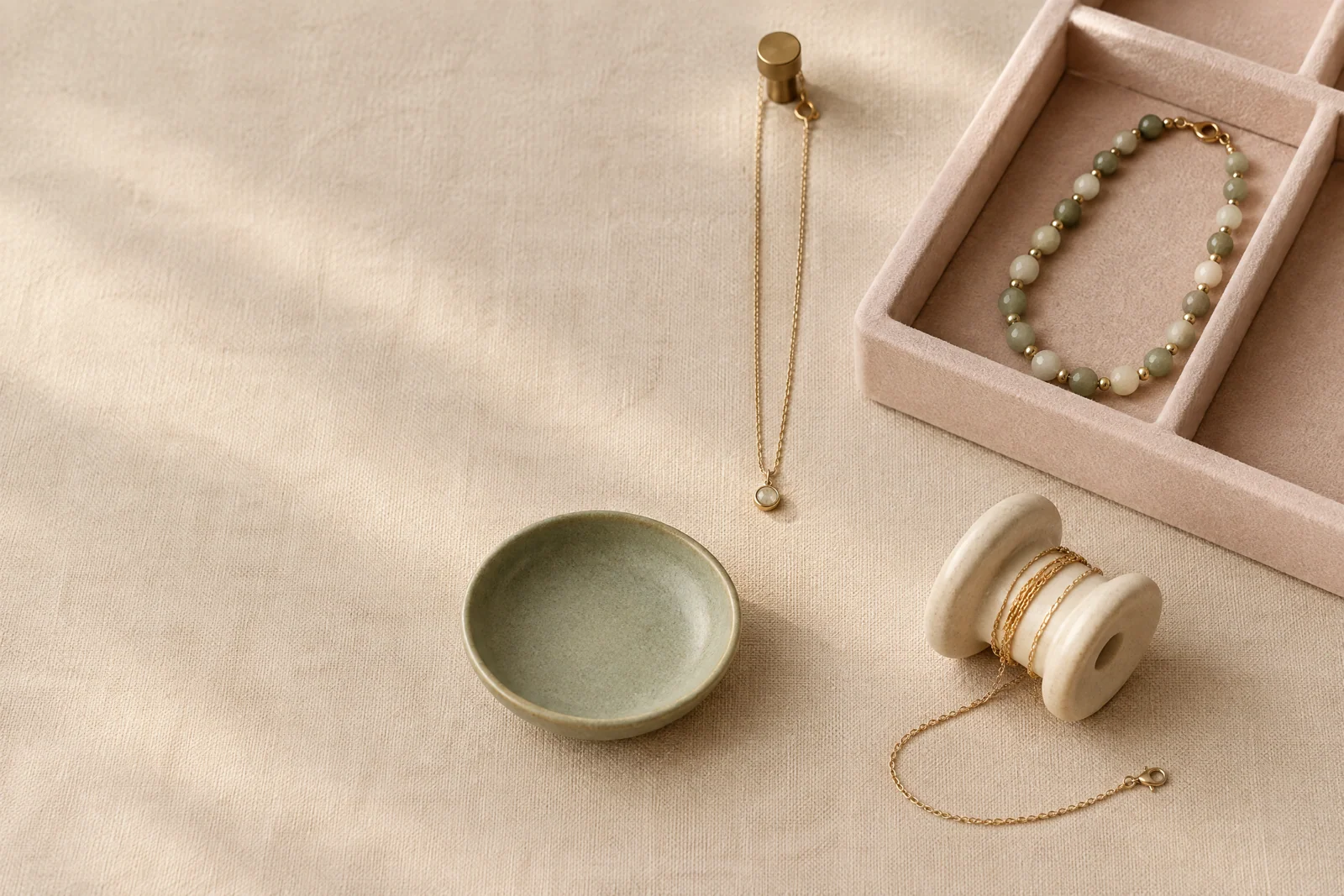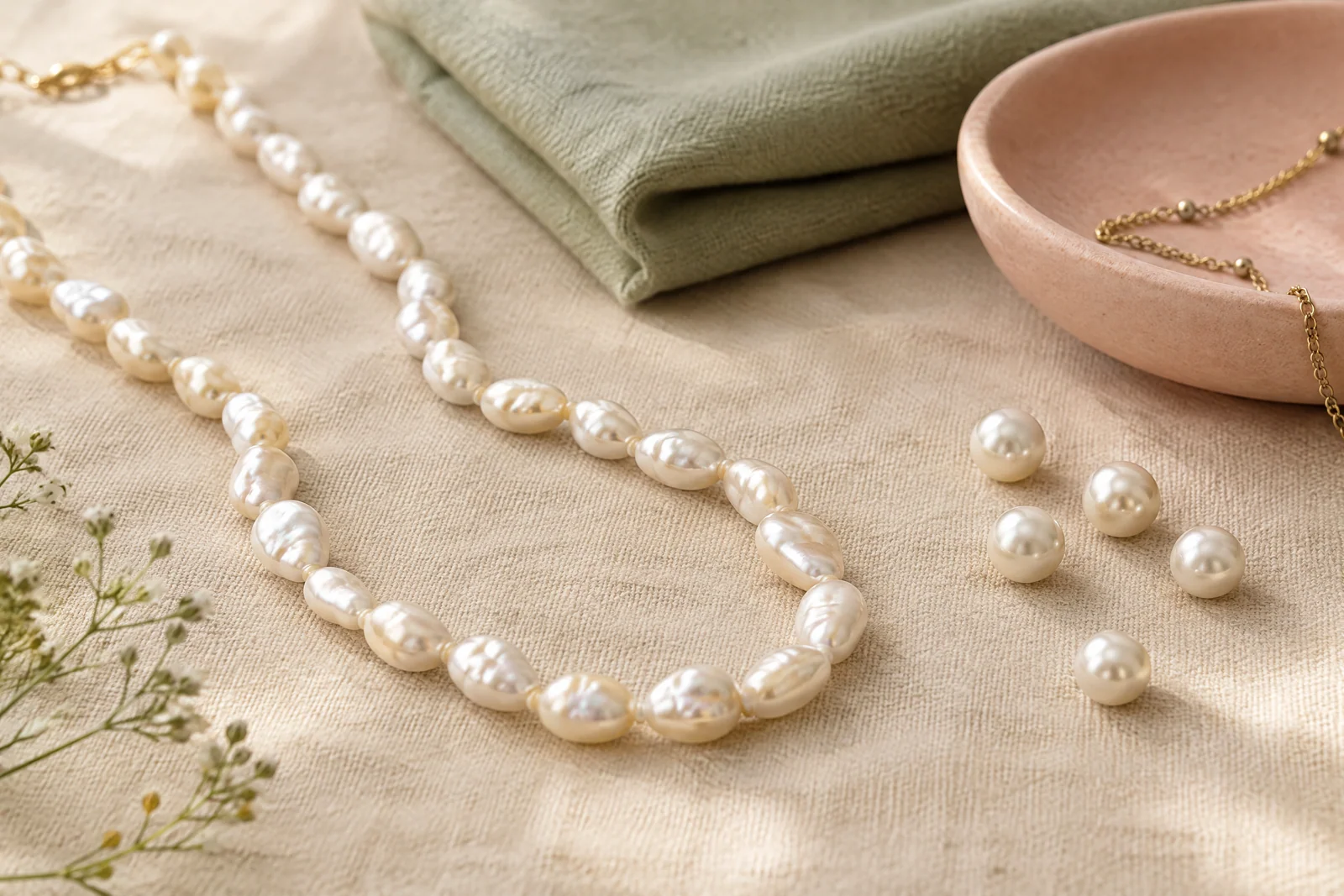
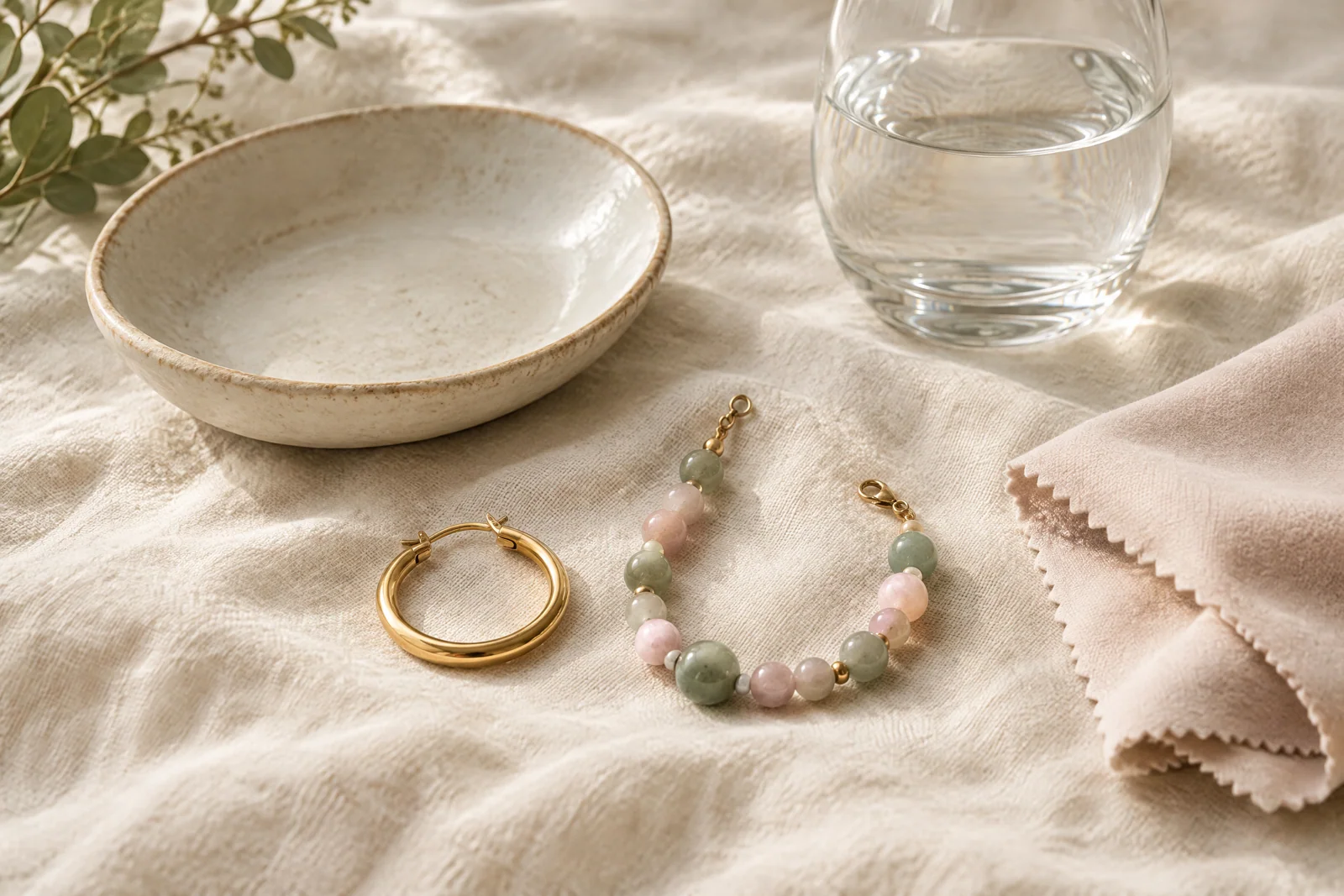
When a favorite piece looks dull, it is tempting to reach for the nearest soap, polish, or clever online trick. But jewelry cleaning is not one-size-fits-all: a method that suits a plain metal surface may be wrong for beads, pearls, enamel, a cord, or a plated finish. The safest first step is not scrubbing; it is identifying what the piece is made of and choosing the least aggressive care that makes sense.
That distinction matters especially during jewelry cleaning on pieces with several materials joined together. A necklace can combine glass beads, plated metal, thread, and a clasp; earrings may pair shell or resin with enamel and metal. Treating the whole piece as if it were solid, unadorned gold or silver can create avoidable wear. These practical guidelines focus on common mistakes, gentle everyday handling, and knowing when to pause and ask for specific advice.
Start with the material, not the cleaning method
Before jewelry cleaning, look closely at the piece and its product description, if you still have it. Note the visible components: metal, plating, stones or beads, pearls, enamel, resin, leather or fabric cord, and any glued or threaded details. The most delicate component usually sets the limit for the whole piece. If you cannot identify a material, do not assume that it tolerates water, polish, or pressure; keep care conservative until you can confirm.
For jewelry cleaning, construction matters as much as the material itself. A simple metal hoop has fewer vulnerable joins than a beaded strand with knots and a small clasp. A surface finish can also be different from the metal beneath it: gold-plated jewelry has a thin layer of gold over another material, while gold-filled describes a distinct construction with a thicker mechanically bonded gold layer. Neither term means solid gold. Abrasive rubbing can wear surface finishes, so a bright metal polish intended for solid precious metal is not automatically appropriate.
Mixed pieces are good examples of why a single cleaning recipe can mislead. The Midnight necklace is described as glass beads with gold-plated mixed-metal details; the On The Beach earrings combine shell, enamel, and gold-plated mixed metal; and the Misty earrings pair resin with gold-plated mixed metal. Those descriptions do not prescribe a jewelry cleaning method, but they do show why it is wise to avoid blanket soaking or harsh polishing on a multi-material piece.
Read any care instructions supplied with the jewelry before jewelry cleaning. If a material is unknown, the piece is sentimental, or a component appears loose, stop before experimenting. You can always ask the seller or a qualified jeweler for advice based on the exact materials and construction. A little uncertainty is a reason to use less moisture and less force, not a reason to test stronger cleaners.
Avoid the shortcuts that cause damage
Mistake 1: soaking the entire piece. A bowl of soapy water may sound gentle, but water can linger in settings, knots, hollow details, or joins. It may also be unsuitable for cord, some stones, glued components, or mixed-material designs. Do not submerge an item simply because one part of it is metal. If instructions allow a damp wipe, apply moisture only where appropriate and keep it controlled; otherwise use a clean, dry, soft cloth.
Mistake 2: scrubbing with a rough cloth or brush. Paper towels, textured fabric, and firm brushing can leave fine scratches or pull at threads and settings. Repeated friction is especially unhelpful for a plated surface or a polished, delicate finish. For jewelry cleaning, use a soft lint-free cloth and light pressure. If a mark does not lift with a gentle pass, do not escalate automatically to a harder brush or more force.
Mistake 3: reaching for household chemicals. Bleach, ammonia, vinegar, alcohol, abrasive powders, and multipurpose cleaners are not universal jewelry products. They can react with or dull certain materials and finishes, and a residue may be hard to remove from small crevices. Avoid applying perfume, hairspray, lotion, or household cleaner directly to jewelry as part of a cleaning routine. When a product label does not specifically address the materials in your piece, leave it out.
Mistake 4: using an ultrasonic cleaner or powered device by default. Vibration and repeated movement can be unsuitable for pieces with delicate settings, beads, pearls, glued parts, or mixed components. Without reliable guidance for the exact item, do not assume a machine is a safer or more thorough option than a cloth. A professional can assess whether a particular piece is appropriate for specialized equipment.
Mistake 5: polishing until the cloth turns clean. Jewelry cleaning is not a contest to restore every surface to a mirror finish. With plated jewelry, over-polishing can wear the finish; with textured or intentionally aged details, it can change the look. Stop when ordinary surface residue is gone. If tarnish, discoloration, or a persistent spot remains, find out what the base material and finish are before trying a stronger treatment.
Finally, during jewelry cleaning, avoid combining methods in one session. A soak followed by a brush and then a polishing compound adds uncertainty without guaranteeing a better result. Jewelry cleaning works best as a small, deliberate intervention: identify, test your assumptions against the care instructions, wipe gently if suitable, and stop if the result is not clear.
A gentler routine for common jewelry materials
For jewelry cleaning on a piece whose instructions permit simple surface care, begin with clean hands and a fresh, soft cloth. Wipe away visible oils or dust using light strokes, paying attention to the surface rather than pushing into settings or between beads. If a cloth alone is not enough, do not add water or cleaner unless you know the materials can tolerate it. This modest jewelry cleaning routine is often enough for regular upkeep between wears.
Plated and gold-tone components: Use a soft, dry cloth and avoid abrasive polishing compounds unless the maker specifically recommends one for that exact finish. Do not confuse plated metal with gold-filled or solid gold; those are different material descriptions, and their care needs are not interchangeable. If the color or finish seems to be changing, stop rubbing. Additional polishing cannot replace a worn plating layer.
Beads and strands: Keep the cloth gentle and work around the strand without pulling on it. Avoid dragging a cloth across knots, thread, or a clasp in a way that puts tension on the construction. For glass beads, also be mindful of the metal details or stringing material alongside them; the bead may be only one part of the piece. If a bead moves unexpectedly or the strand feels weak, set it aside rather than cleaning through the problem.
Pearls, shell, and enamel: Treat these surfaces with particular restraint. Avoid abrasive materials and unverified chemical cleaners, and do not soak a piece just because the visible surface seems smooth. A soft, dry cloth is a cautious first choice when no more specific instructions are available. Natural shell can vary in appearance, while enamel may be susceptible to chips if knocked or scrubbed; careful handling matters as much as wiping.
Resin, leather, and textile cord: For jewelry cleaning on resin or cord, keep care dry and controlled unless the item’s own instructions say otherwise. Moisture can affect components around resin and can be difficult to remove from cord or knots. Avoid twisting, stretching, or leaving the piece in a damp cloth. For a mark that will not come away with a gentle dry wipe, ask for material-specific advice rather than trying a solvent or soaking method.
After any permitted wipe, inspect the clasp, links, backs, and connections in good light. The aim of jewelry cleaning is to remove everyday surface residue, not to repair looseness or restore a finish through force. If your collection includes different types of pieces, you can browse our necklaces and earrings with their individual material descriptions in mind; do not assume all pieces in a category share the same care needs.
Drying, storage, and when to ask for help
One overlooked part of jewelry cleaning is what happens next. If the care instructions permitted a small amount of moisture, blot rather than rub and let the piece dry fully in a safe place before storing it. Do not use a hair dryer, heater, or direct high heat to speed things along. If a piece includes cord, beads, or several connected materials, check discreet crevices and joins for lingering dampness without tugging on them.
After jewelry cleaning, store jewelry dry and separate from pieces that could scratch, snag, or tangle with it. A soft pouch or divided compartment helps keep chains from knotting and delicate surfaces from rubbing together. Avoid leaving jewelry on a bathroom counter, beside a sink, or in a place where splashes and everyday products collect. For more ideas, see our guide to accessories and the practical article on storing necklaces without tangling them.
Pause and seek qualified help if a stone or bead is loose, a clasp is failing, a strand is frayed, a surface finish looks uneven, or discoloration persists despite gentle handling. Do not try to reattach a part with household glue or polish away a mark whose cause you do not understand. A repair question is different from routine cleaning, and a trained jeweler can inspect the construction before recommending a next step. For an especially valuable or sentimental piece, it is sensible to ask before cleaning at home at all.
Keep a small care note with the item if you learn a specific method from its maker or a jeweler. Record what the piece is made of and what to avoid; do not generalize the instruction to other jewelry. That simple habit makes future jewelry cleaning less of a guess and helps you recognize when an item needs attention beyond a wipe. For brand and contact information, you can visit About Duddingtons or contact us.
The guiding principle is simple: choose the gentlest suitable approach, protect the most delicate component, and stop when you are unsure. Skipping an aggressive shortcut is often better care than trying to make every piece look newly polished.
Related reading
For more thoughtful jewelry cleaning and care, continue with How to Care for Gold-Plated Jewelry Gently, How to Store Necklaces Without Tangling Them, and A Gentle Care Guide for Pearl and Faux-Pearl Jewelry.