Gold and silver used to be treated like guests who needed separate invitations. Today, mixed metal jewelry feels less like a rule to break and more like a simple way to make a personal collection work harder. A warm gold chain beside a cool silver pendant can look considered, relaxed, and entirely your own—especially when you give the combination a little visual rhythm.
The easiest approach is not to match every finish perfectly. Instead, choose one point of connection: a repeated shape, a shared texture, a color in your outfit, or a piece that already combines the two tones. Then let the contrast do its work. Whether you are building a necklace stack or choosing earrings for a weekday outfit, mixed metal jewelry can make familiar pieces feel newly intentional.
Start with one anchor, not a matching set
When two metal colors first meet, give the eye somewhere to land. An anchor can be the piece you notice first: a pendant, a watch, a substantial hoop, or a chain with an interesting link. Add the second tone nearby in a smaller or quieter role. The balance does not need to be exactly half gold and half silver; one finish can lead while the other acts as punctuation.
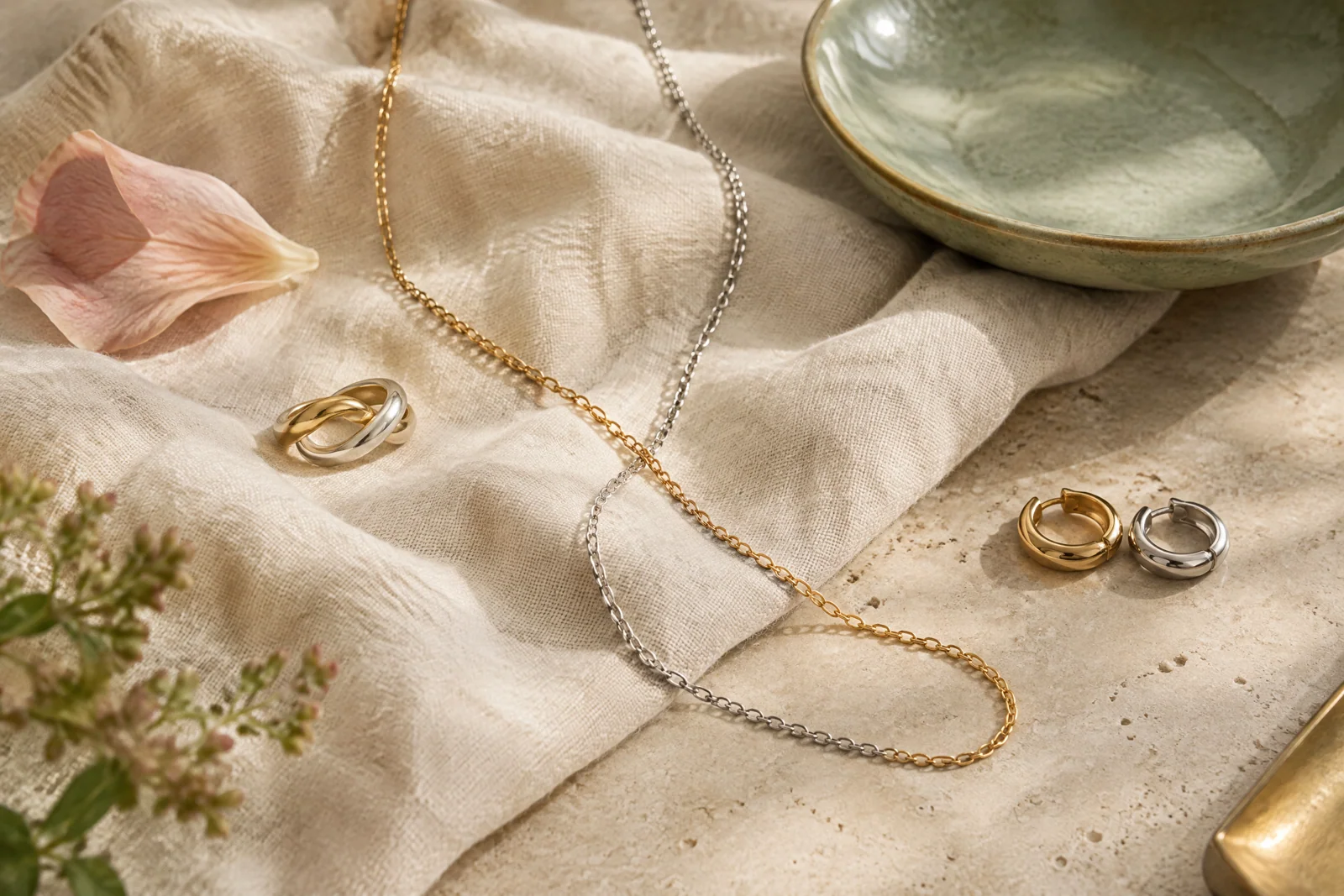
A useful beginner formula for mixed metal jewelry is one gold focal piece, one silver companion, and one neutral element. For instance, wear a gold chain with a silver ring and a cream, black, or denim backdrop. Or start with silver earrings, then add a fine gold necklace. For mixed metal jewelry, the neutral space keeps the metals legible, while the contrast makes the styling feel deliberate rather than accidental.
Look for a bridge piece if you want the combination to feel especially cohesive. It might combine both tones, repeat a shape you are wearing elsewhere, or have a detail that relates to each piece. A two-tone watch, a charm with mixed finishes, or a silver necklace worn beside a gold chain can serve as that visual handshake. If you do not own a true two-tone item, repetition can create the same effect: repeat a small gold accent once more, or let silver appear in two places.
Think in terms of proportion as well as color. A bold gold pendant can be balanced by a slim silver band; several heavy chains in different finishes may compete for attention. Vary scale—fine with chunky, smooth with textured, short with long—to make mixed metal jewelry feel layered rather than crowded. That is the aim of mixed metal jewelry styling: a clear focal point, not a mathematical ratio.
Build a balanced mix across necklaces, earrings, and rings
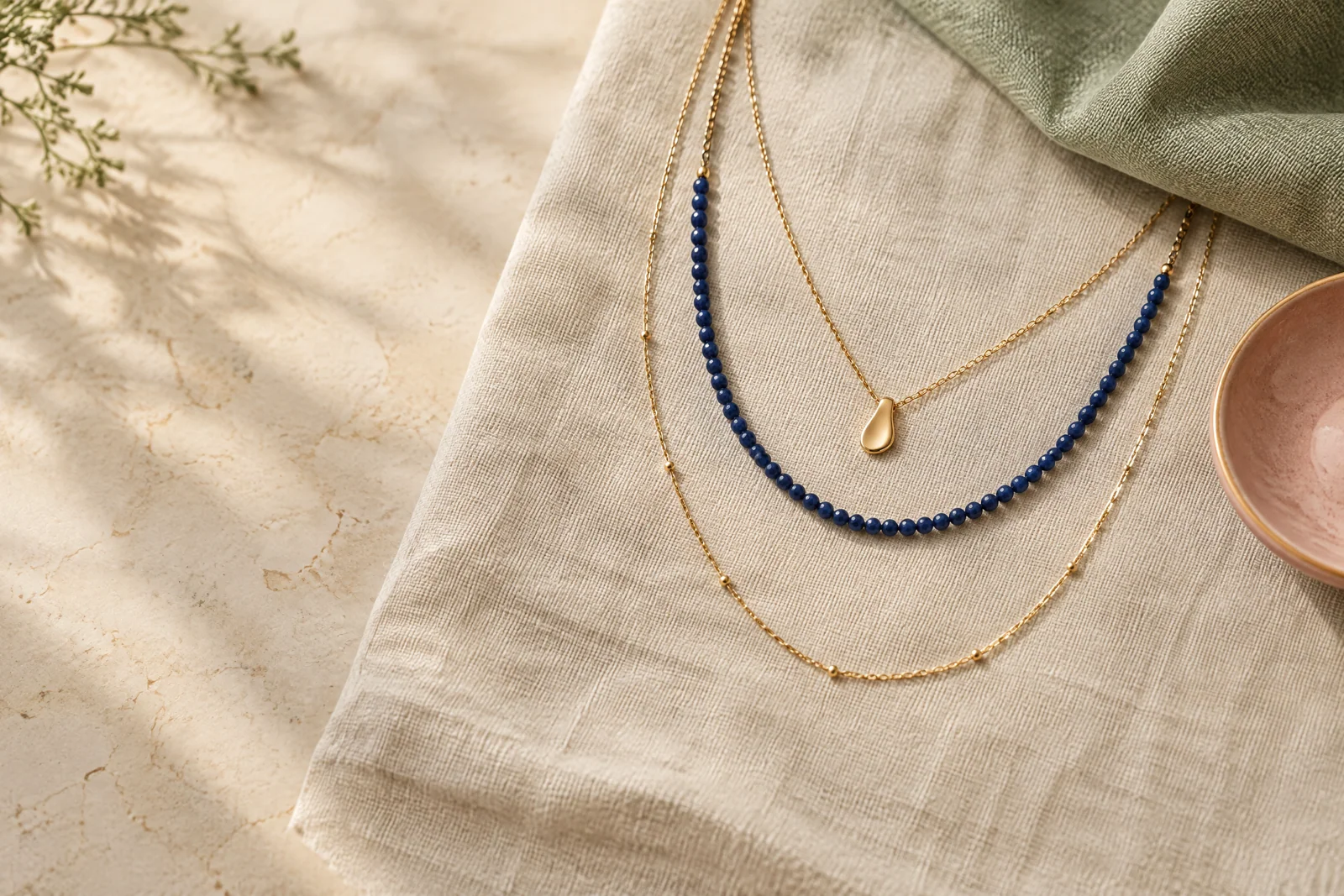
Necklaces are a forgiving place to begin styling mixed metal jewelry because length and texture create natural separation. Try a shorter chain in one tone and a longer pendant in the other, leaving enough space for each outline to show. Similar chain weights can look polished; visibly different links feel more relaxed. If both necklaces carry large charms, simplify the rest of the look. If the pendants are small, a textural chain can add definition without adding another focal point.
For a real-world reference, Duddingtons' Atlas necklace is listed in either sterling silver or 22k gold-plated sterling silver, with a cable chain and T-bar charm. The catalog describes those as finish options, not as a single two-tone necklace. Wearing two finishes together is a styling choice, and a separate silver or gold piece can supply the contrast. Explore more silhouettes in the necklace collection and compare length, pendant scale, and chain texture before you layer.
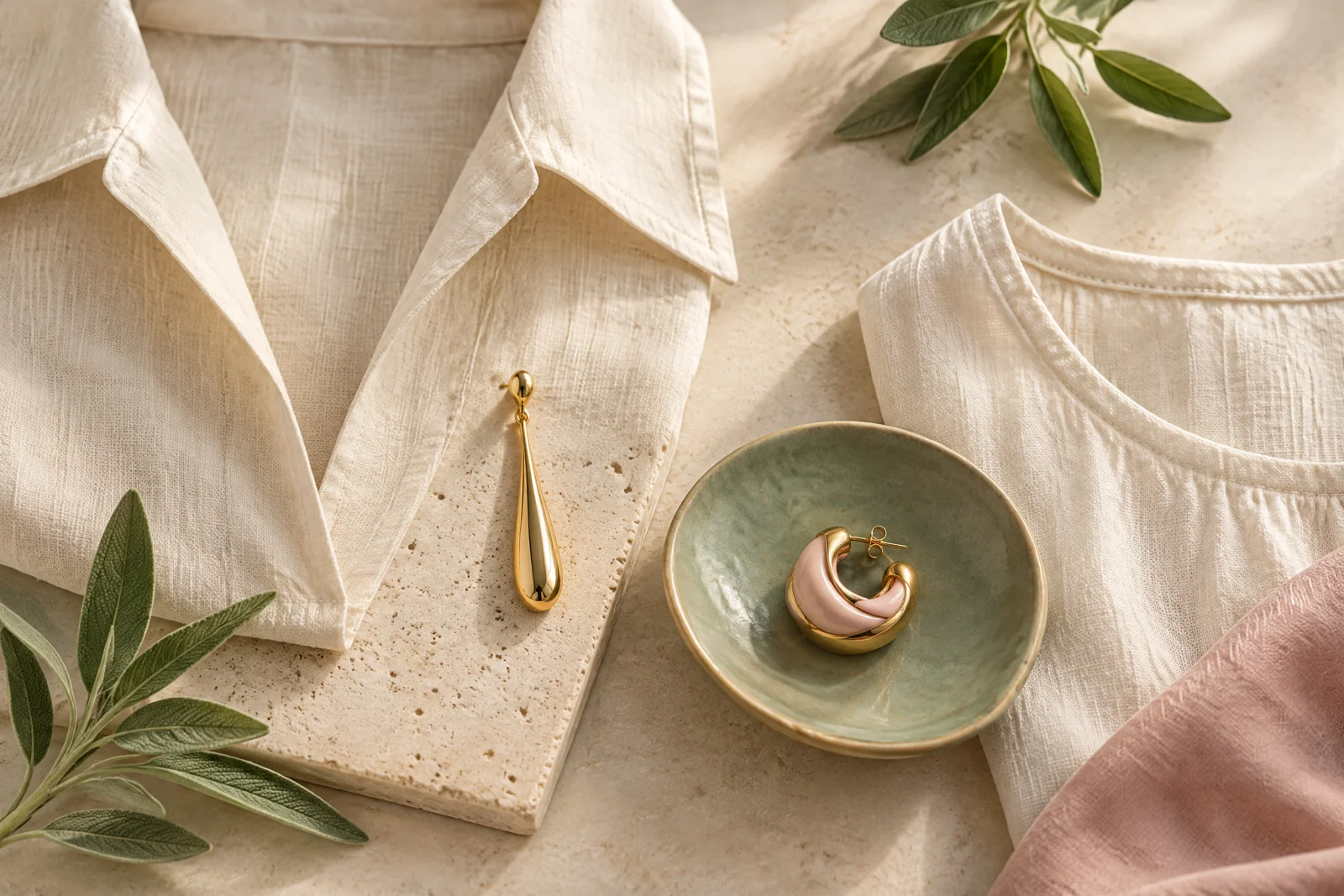
Mixed metal jewelry also works around the face: earrings can connect the tones without requiring a full stack. One simple idea is to wear gold hoops with a silver pendant or vice versa; the separation gives each finish room. If you have multiple piercings, distribute the colors in a small pattern—gold, silver, gold—rather than putting every accent on one side. With a single pair, let a necklace, glasses, or another detail carry the second tone. The earring collection is a useful place to compare bold shapes with quieter everyday forms.
For mixed metal jewelry, rings and bracelets invite a more tactile mix. Two slim bands in different tones can sit together comfortably, while a wide ring often looks best with more breathing room. On the wrist, a gold chain bracelet beside a silver watch creates a clear, familiar pairing. You can also keep the metals on separate hands if you want a calmer effect. Browse rings or bracelets for pieces that can add contrast without overwhelming the rest of your outfit.
At Duddingtons, the catalog also lists the Jenny necklace and George bracelet in sterling silver or 22k gold-plated sterling silver options. They are described as textured-link styles available in gold or silver, rather than as mixed-tone pieces. That kind of repeatable chain language can help when you want to coordinate a necklace and bracelet while choosing different metal colors. Treat product descriptions as the guide to each specific finish; a gold-colored surface does not automatically mean solid gold, and gold-plated silver is not the same material as sterling silver.
Use clothing color and texture to make the contrast feel natural
Clothing can act as the quiet background that lets two metal tones in mixed metal jewelry make sense together. White, cream, charcoal, black, and denim are easy starting points because they do not compete strongly with gold or silver. A crisp white shirt can make both finishes look bright; a dark knit gives them definition. These are starting points, not restrictions—wear the combination with the colors you love.
When styling mixed metal jewelry with color, notice the temperature and intensity of the garment rather than applying a strict warm-versus-cool rule. Olive, rust, and camel often echo gold, while blue, lavender, and cool gray can make silver stand out. But the best combinations may come from contrast: silver with a warm red, gold with a powder-blue shirt, or both tones against sage. Mixed metal jewelry can repeat tiny glints in buttons, a belt buckle, or a bag clasp and make an outfit feel connected.
Texture also matters when styling mixed metal jewelry. A polished gold chain against a brushed silver ring has a subtle difference even before color registers. Pair smooth surfaces with hammered, rope-like, or beaded forms to build depth. If the outfit already has a lot of texture—cable knit, print, sequins, or detailed embroidery—keep the jewelry shapes simpler. If clothing is pared back, one sculptural or layered combination can supply the interest.
For a low-effort mixed metal jewelry uniform, decide what you usually reach for first. If it is a silver watch, add one fine gold chain or ring and let that be the repeatable signature. If your favorite necklace is gold, try a silver hoop or a cool-toned stone nearby. This is not a commitment to wear every piece every day; it is a small formula you can adjust to the neckline, color, and mood. When you want more color ideas, the accessories collection can help you think about how jewelry relates to the rest of your finishing details.
Keep the look intentional—and care for each piece on its own terms
Before leaving the mirror, check the whole composition of your mixed metal jewelry rather than inspecting each item in isolation. Ask: Is there a clear focal piece? Do both tones appear for a reason? Can you see the shape of every necklace or earring? If the answer is no, take one item away or move it so the finishes are easier to read. A balanced mix often feels calm because the pieces have space, not because there are equal numbers of each color.
A quick mixed metal jewelry edit has three steps: choose the anchor, add one contrasting finish, then repeat a color, shape, or texture once. If you want a bolder look, add volume through one dimension—more length, a larger silhouette, or a brighter clothing color—rather than stacking extra focal pieces all at once. A photograph in natural light can be useful because it reveals whether a combination feels cohesive from a little distance.
Care should follow the material description for each individual item. Gold-plated jewelry has a surface layer over another material; sterling silver and gold-filled components are different constructions, and beads, shells, enamel, cord, or stones may need gentler handling than a plain metal chain. Do not assume a piece is solid gold because it looks golden, or that two pieces can be cleaned the same way because their colors match.
As a cautious everyday habit, put jewelry on after fragrance, lotion, and styling products have dried, and remove pieces before activities where they may be knocked, snagged, or exposed to moisture. Wipe a piece gently with a soft, clean cloth when appropriate, and store different items separately to reduce tangling and surface contact. Avoid soaking mixed-material jewelry or using a cleaning method unless the product information says it is suitable for all of its components. If you are unsure, check the item's details or ask the retailer before trying a stronger cleaner.
Ultimately, mixed metal jewelry styling is less about following a formula than finding a repeatable balance that feels like you. Start with two pieces already in your rotation, give them one point of connection, and see how they work with the clothes you actually wear. A subtle contrast can become part of your signature; a bolder combination can turn a simple outfit into something more expressive. Either way, the most useful rule is the one that makes you want to wear your jewelry again.
Related reading
Continue exploring the Duddingtons style edit with How to Layer Necklaces Without the Tangles, How to Style Beaded Necklaces with Everyday Outfits, and How to Choose Earrings for Your Neckline.