Necklace layering should feel like an easy finishing touch, not a puzzle to untangle at the end of the day. The secret is less about owning a perfect set and more about choosing pieces with different lengths, weights, and visual roles. With a little planning, a short chain, a bead strand, and a longer pendant can sit comfortably together and still feel like you.
Start with the neckline and the pieces you already reach for. Then create enough space between each necklace for its shape to read clearly. This guide walks through a practical order of operations—from measuring and fastening to color and care—so your necklace layering looks intentional and stays easy to wear. The aim is a useful formula, not a strict rulebook: a quiet everyday trio can be as expressive as one bright strand paired with a fine chain.
Build the stack with length and proportion
Begin by laying your chosen necklaces flat on a table. Look at where each strand would fall on your body, not only at its total length. This is the foundation of necklace layering: space matters more than an exact inch count. A two-inch difference can create a visible step for delicate chains, while a larger bead strand or statement charm may need more breathing room. If two pieces land at nearly the same point, they are more likely to overlap, compete, or catch against each other. Good necklace layering gives each piece a place to be seen.
Use the shortest necklace as an anchor. It may be a fine chain near the collarbone, a snug bead strand, or a small pendant that you wear often. Add a second piece that sits noticeably lower; then decide whether a third layer adds balance or simply adds more movement. There is no magic measurement because necklines, pendant size, and body proportions all change the effect. Try the pieces on, then take a quick mirror photo from the front and side. That quick test makes necklace layering easier to assess than a guess based on a clasp setting. The camera often makes crowded spacing easier to spot.
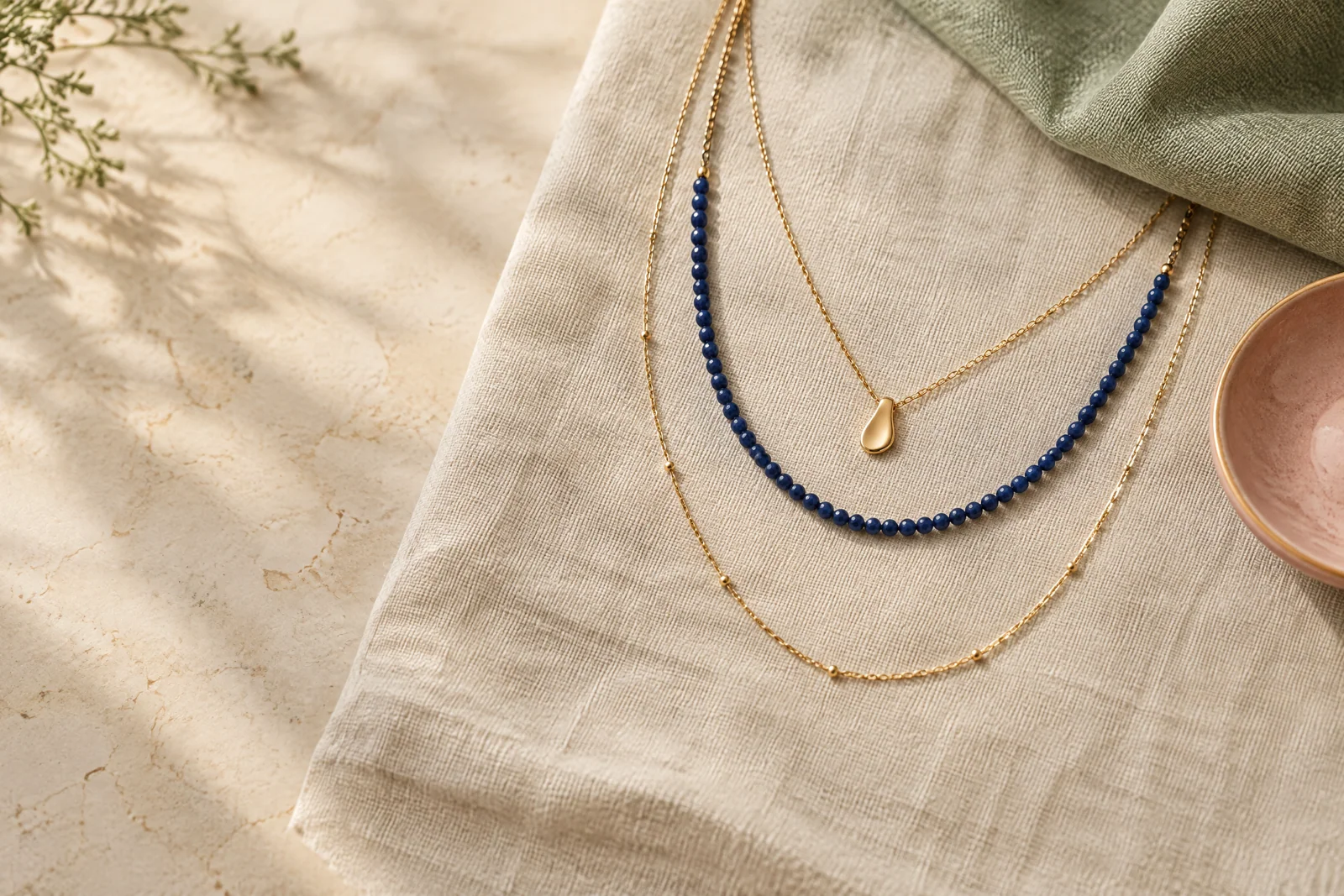
Think in visual weights as well as lengths. Two substantial strands can look crowded even when their clasps are secure, whereas a bold focal necklace can pair beautifully with a nearly invisible chain. Thoughtful necklace layering gives each focal element room. A simple pattern is fine, textured, focal: a fine chain, a bead strand, and one pendant. Another is small pendant, plain chain, longer colored strand. For necklace layering that feels relaxed, change one feature at a time rather than stacking three pieces that all have the same scale and shine.
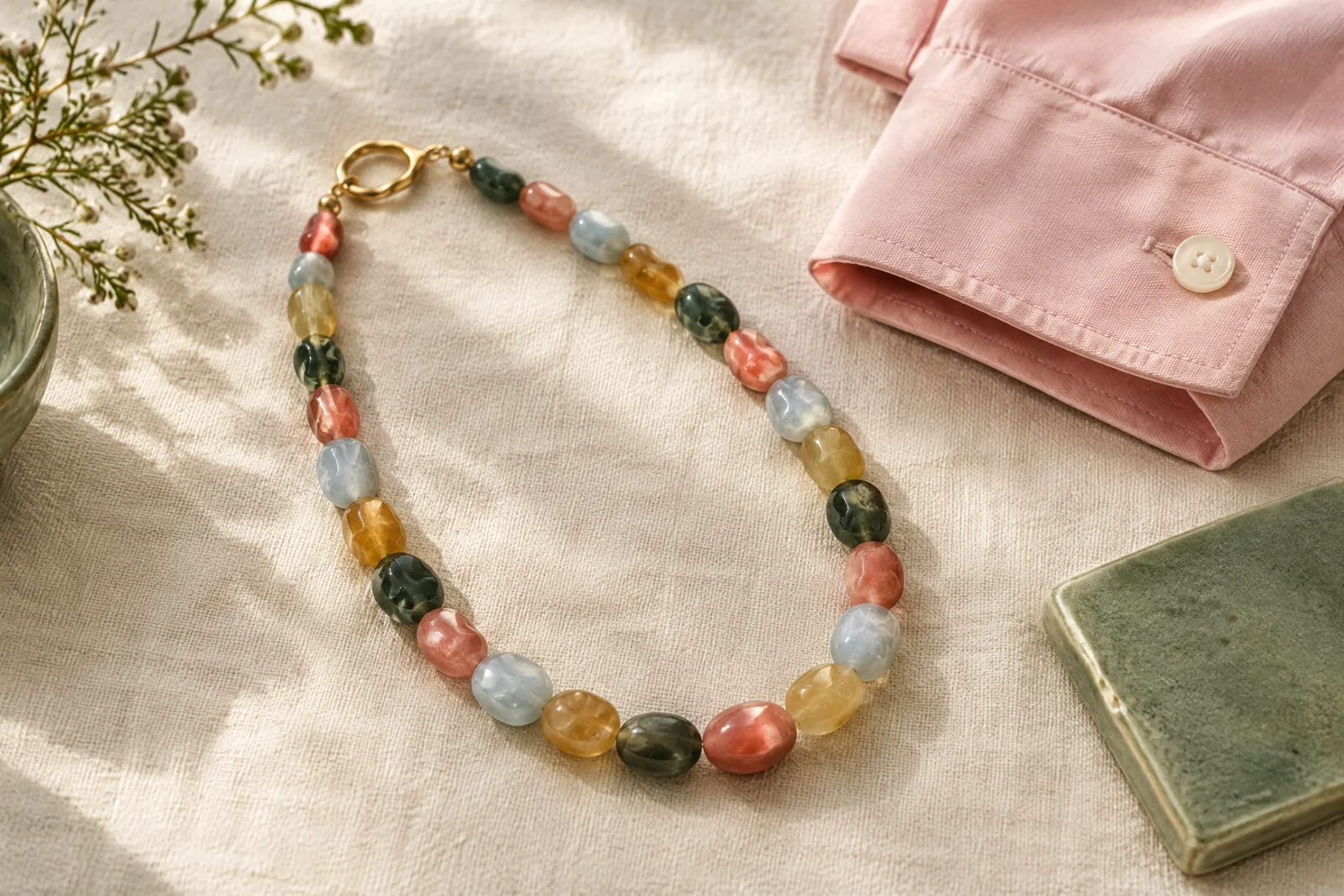
When a piece has an extender, use it to test a small adjustment before adding another necklace. Catalog details can help you picture how a piece may sit: Duddingtons' Midnight is described as a glass-beaded necklace about 40 cm long with a 5 cm extender, while Karia is a 42 cm red glass-bead necklace. Those different lengths offer a useful starting point for trying a short-to-long relationship; actual placement depends on your neckline and how the necklace fits you. Use that as a starting point for necklace layering rather than assuming a length guarantees a particular fit.
Choose pieces that complement, not compete
Give every necklace a job. One can provide color, one can bring a small point of light, and another can establish the shape of the stack. When all three are focal pieces, the eye has nowhere to rest. If a favorite necklace is already bold—large beads, an expressive charm, or a high-contrast color—let it lead and choose quieter companions. If your base layer is very fine, a second strand with a little more texture can add definition without overwhelming it.
Color is a practical tool. In necklace layering, color can create contrast even when silhouettes stay simple. A warm gold-tone chain beside navy or ink-blue beads gives contrast; a soft blush or cream top may make both feel gentle. A single bright strand can enliven a neutral outfit, while two related tones can make a stack feel calm. Repeat one color elsewhere—perhaps in a print, bag, or lipstick—if you want the necklace to feel connected to the rest of the outfit. You do not need exact matches. Repeating a color family is often enough. It is one of the easiest necklace layering cues to repeat across different outfits.
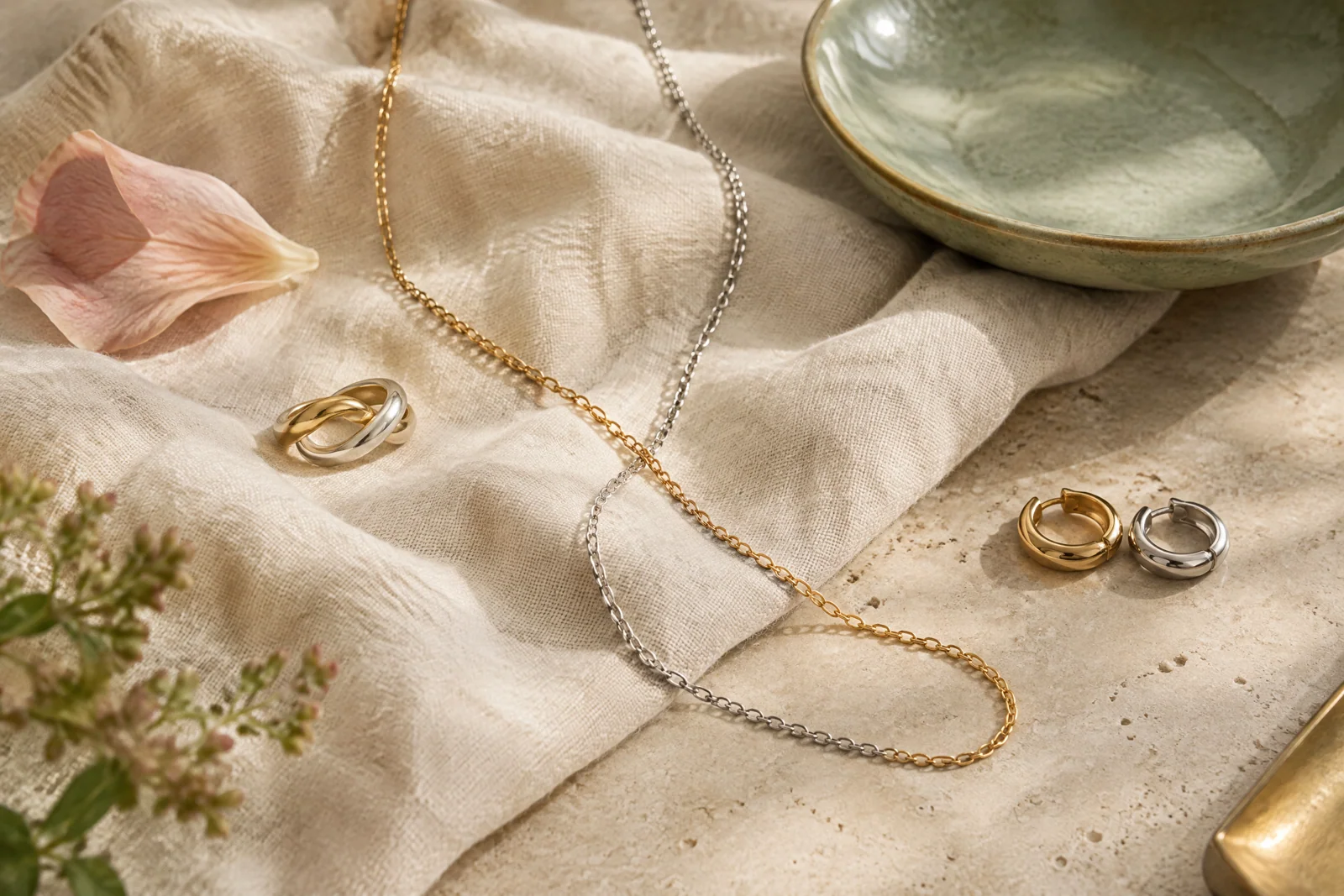
Mixed metals can look deliberate when one detail links them. Necklace layering gives you a small canvas for repeating a finish without matching every piece. Try a silver-toned bead strand with a gold-tone pendant, then echo either finish in earrings, a ring, or a bracelet. Or keep the necklaces in one metal and introduce color through beads instead. For more combinations, browse the necklace collection and consider the styling ideas in our guide to mixing gold and silver jewelry. The point is not to match every surface; it is to create a small, coherent conversation between pieces.
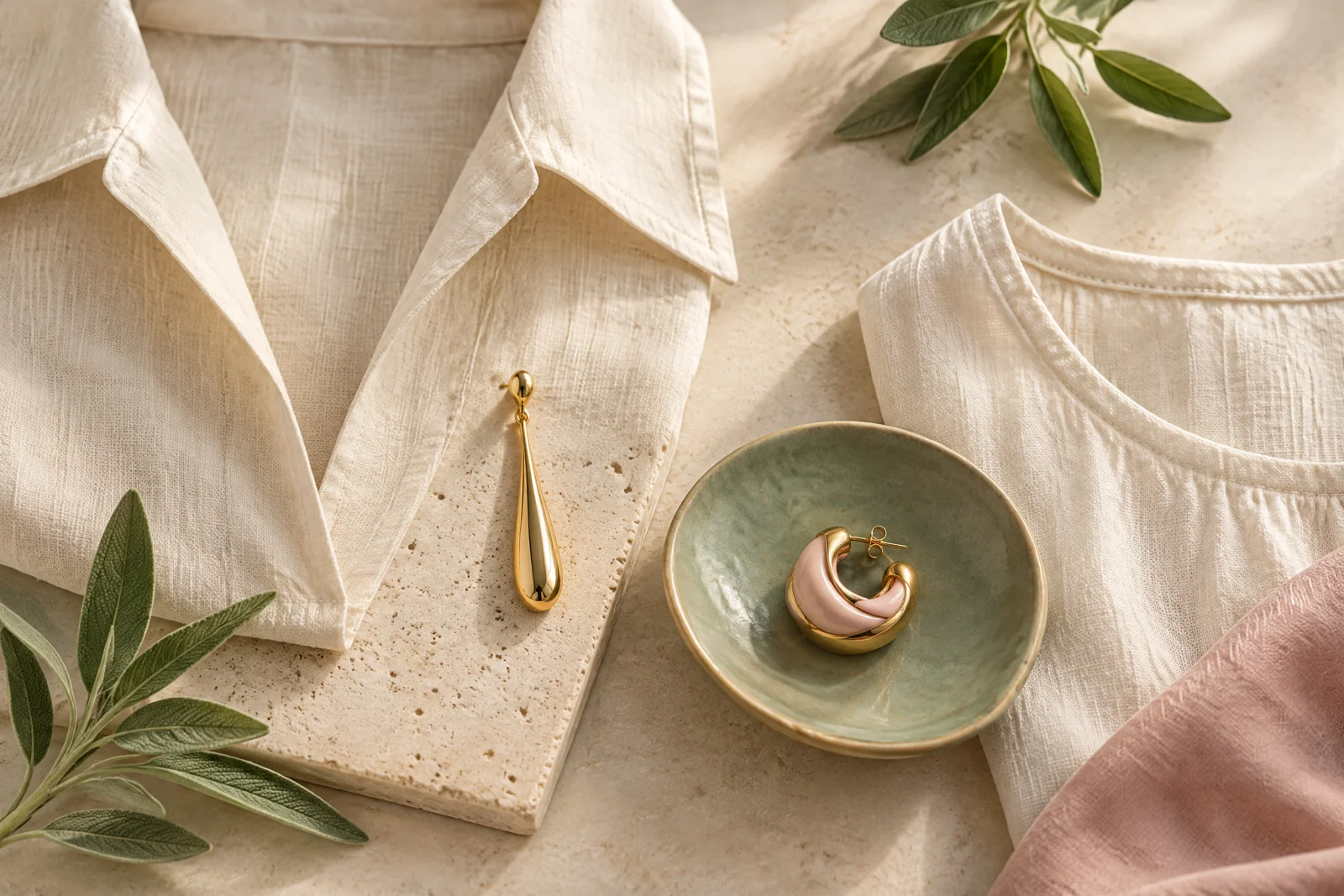
Consider the neckline before settling on the stack. An open collar or V-neck naturally frames a pendant; a crew neck gives shorter layers a clean edge and can leave space below for a longer line. With a high neckline, longer necklaces may sit on the fabric rather than against skin, so check that the chain and pendant lie smoothly. For a patterned shirt, keep one layer simple to avoid visual clutter. On a plain tee, color and texture can do more of the work. The best necklace layering responds to the outfit rather than competing with it.
Beads and chains also move differently. Movement is an overlooked part of necklace layering, especially when clothing has a textured surface. A smooth fine chain may slide over a knit, while a beaded strand has more texture and can settle into fabric. If a scarf, collar, or open cardigan is part of the outfit, test how the layers move when you turn your head and shoulders. A necklace that looks balanced when still may shift once you walk. Edit the stack until it feels comfortable through ordinary movement, not only in a mirror pose.
Reduce tangles with a simple dressing routine
Different lengths help, but the way you put necklaces on matters too. A calm necklace layering routine begins with fastening one piece at a time. Fasten each piece separately rather than clipping several clasps together. Put the shortest one on first, check that its pendant faces forward, then add the next. Before fastening a new layer, let the chain fall naturally instead of twisting it around your fingers. A calm sequence gives links less opportunity to cross, and makes it easier to spot a clasp caught in another strand.
- Close and orient: Fasten one necklace, turn the clasp toward the back or side if comfortable, and check that the pendant or focal bead faces the right way.
- Set the next length: Add the second necklace and adjust its extender or clasp position so the strand falls clearly above or below the first.
- Move before adding more: Turn your head, lift your arms, and let the necklaces settle. If they repeatedly cross, change a length or remove one layer.
For a recurring tangle, look for the cause rather than adding more hardware. Two chains of similar length can wind together because they occupy the same space. A light chain and a heavier pendant can also pull and rotate as you move. A bead strand paired with a smooth chain may behave better if their lengths differ; alternatively, place a pendant between the two rather than directly beside another charm. A necklace layering combination is successful when the pieces can shift a little without becoming a knot.
Layering clasps and multi-strand connectors are optional tools, not requirements. For necklace layering that needs a connector, choose one that fits the clasps without forcing them. A connector can make several chains easier to fasten together, but it may limit how freely each piece moves and may not suit every clasp or chain. Try it with inexpensive or less delicate pieces first, and avoid forcing a clasp through a connector that does not fit. If you prefer to keep necklaces independent, fasten each one normally and store each strand separately afterward.
When removing the stack, undo each clasp one at a time and place each necklace in its own compartment or soft pouch. If two chains have already crossed, lay them flat and work from the loosest point with patient fingers; pulling both ends tight usually makes the crossing harder to release. For longer-term ideas, see how to store necklaces without tangling them. Thoughtful storage is the second half of tangle-free necklace layering.
Make the formula yours and care for each piece
A reliable everyday formula is one close-fitting or short piece, one medium layer with a different texture, and—only if it adds something—a longer accent. This necklace layering formula keeps the focal point clear while leaving room to experiment. Use it as a starting point for different moods: a small pendant with a bead strand for color; two delicate chains with different silhouettes for a subtle look; or one substantial necklace on its own when it already makes the outfit. The right number of layers is the number that feels comfortable, balanced, and unmistakably yours.
Adapt the formula to the day. For work or a busy commute, fewer, lighter pieces may be easier around collars, bags, and headphones. For dinner, a longer pendant can add movement over a simple top. A patterned dress may call for a single color accent, while linen or a plain cotton tee can welcome contrasting textures. In warm weather, consider how sweat, sunscreen, fragrance, and frequent changes of clothing may affect different materials. Take necklaces off before activities where they may snag, and follow any care guidance supplied with the individual piece.
Care should follow the most delicate material in each necklace. In necklace layering, one mixed-material piece can call for gentler handling of the whole stack. Beads, plated components, cords, and chains do not necessarily respond the same way to moisture or cleaning products, so do not assume the whole stack can be soaked or treated with an ultrasonic cleaner. As a gentle general habit, keep jewelry away from sprays and lotions where practical, remove it before bathing or swimming, and wipe it with a soft dry cloth after wear if the material allows. For mixed-material pieces, check the product description and choose the cautious option. Avoid pulling a strand to straighten it or hanging a delicate beaded necklace where its weight could strain the cord.
Keep an easy edit routine: before leaving, check that clasps are closed, charms face outward, and no strand is caught under a collar. This final necklace layering check takes only a moment. At the end of the day, take the necklaces off separately, inspect for twists, and store them apart. If a chain or clasp appears damaged, pause wearing it until it can be checked rather than risking a lost piece. You can explore current styles through new arrivals and the broader accessories collection; product descriptions are the place to confirm details for an individual item.
Most of all, let necklace layering remain playful. Start with two favorites, adjust their spacing, and add a third only when it brings a new color, shape, or point of interest. The pieces do not need to be a pre-matched set, and an intentional stack does not have to look perfectly symmetrical. A little contrast, a clear focal point, and room for each necklace to move are enough to turn getting dressed into a small creative ritual.
Related reading
Keep exploring with our guides to styling beaded necklaces with everyday outfits, mixing gold and silver jewelry, and choosing earrings for your neckline.