Great earring styling starts with the space around your face and collarbone. A pair that feels perfect with an open V-neck may look crowded beside a buttoned collar, while a neat stud can disappear against a high, simple neckline. The aim is not to follow rigid rules; it is to notice the lines your clothes create, then choose earrings that echo, soften, or deliberately contrast them. This guide offers a practical way to make that choice, whether you are dressing for a crisp shirt, a favorite crewneck, or a bare-shouldered evening top.
Think of the neckline as a frame, not a restriction. Your hair, the fabric's color and texture, and how much jewelry you already plan to wear all matter. A small change—opening one button, tucking hair behind an ear, or swapping a long drop for a compact hoop—can shift the balance. With a few simple principles, earring styling becomes less about memorizing a chart and more about getting dressed with confidence.
Read the neckline's shape before choosing a pair
Start by tracing the top edge of your garment in the mirror; this quick observation is the foundation of thoughtful earring styling. Is it angular, rounded, straight across, or built from a collar? Then decide whether you want the earrings to repeat that shape or offer a counterpoint. Repeating a line feels composed; contrasting it adds movement. Neither is automatically better—the useful question is what you want the outfit to say. Clear earring styling is simply a way to make that choice feel considered.
V-necks and open necklines: A V creates a downward point and leaves an open channel at the chest. Slim drops, narrow ovals, and delicate linear earrings can continue that vertical feeling without copying the exact angle. If the top is deeply cut or the fabric is already dramatic, keep the earring's width modest so the eye can travel naturally from face to neckline. Small rounded hoops are a softer counterpoint when you want a relaxed, less directional look. This is a particularly easy place to experiment with earring styling because the open space gives longer shapes room to move.
Round and crew necks: A crewneck draws a curved border close to the base of the neck. Rounded studs, compact hoops, and short drops tend to sit neatly beside that curve. If you choose a longer earring, let it create a clear vertical accent rather than ending exactly where the collar is most visually busy. A plain tee can support a more noticeable silhouette; a thick ribbed collar or layered knit may call for a quieter pair. This kind of earring styling lets fabric texture set the volume.
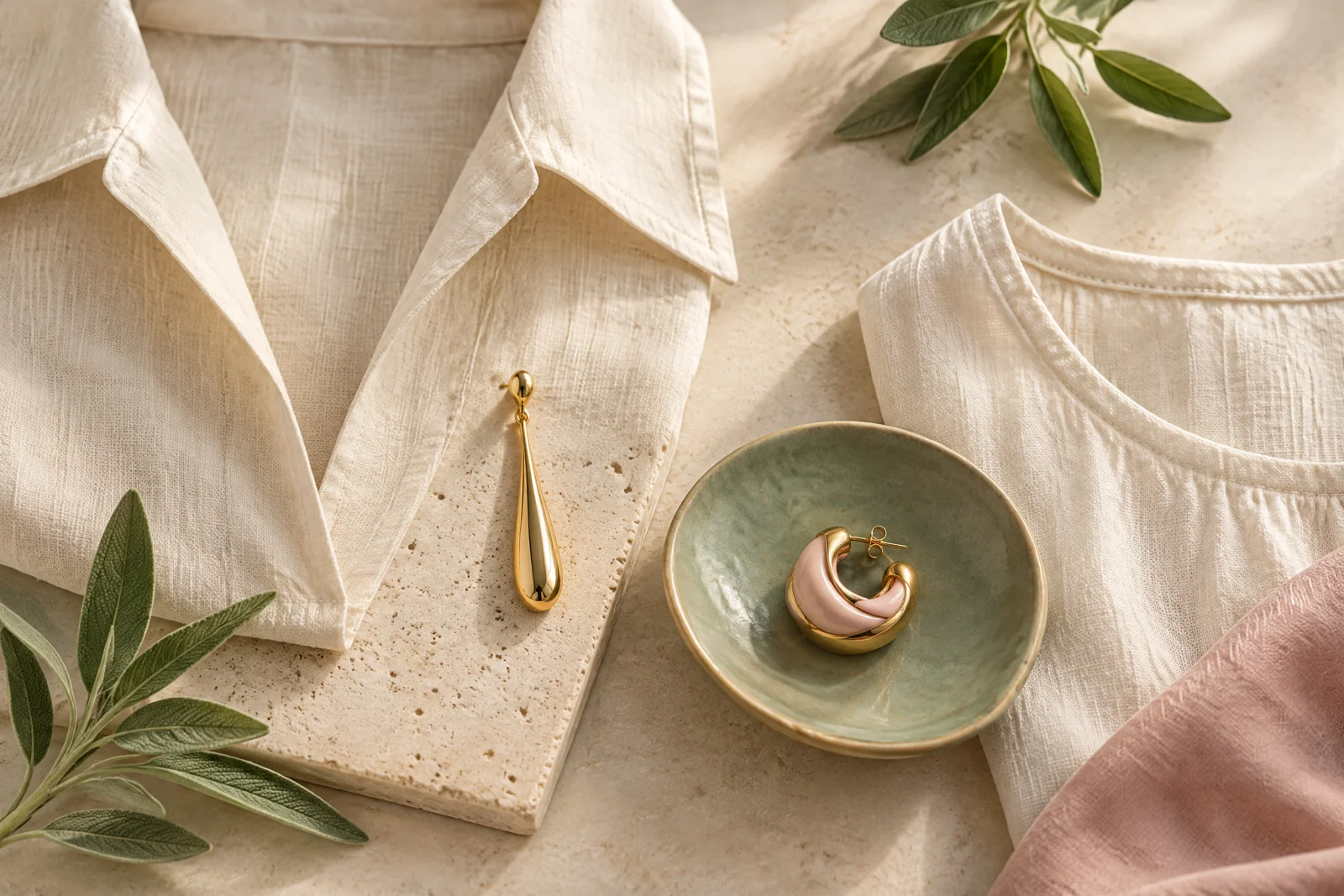
Button-down collars: Collars bring their own points, folds, and hardware. With every button fastened, try a small stud, a fine hoop, or a slim drop that does not tangle visually with the collar tips. With the top buttons open, there is more breathing room for a medium-length earring. If the shirt has a strong stripe or a saturated color, an uncomplicated shape can help the whole look feel intentional. For earring styling with a shirt, also check whether the earrings catch on the collar when you turn your head; comfort should inform the choice.
Square, bateau, and off-the-shoulder necklines: Straight or wide necklines emphasize the shoulder line. A rounded hoop or a drop with a soft curve can balance that horizontal expanse; a clean geometric stud can keep a square neckline crisp. Off-the-shoulder styles leave the neck and shoulders exposed, so you can choose a more expressive earring, but you do not have to. A small bright accent can look as considered as a dramatic drop when the garment is already the focal point, a useful reminder that earring styling need not mean choosing the largest piece.
Balance length, volume, and visual weight
Neckline shape is only half the decision. Consider the scale of the fabric and the amount of space between your ear and shoulder. A fine, fluid blouse can be overwhelmed by an especially chunky earring, while a structured jacket may make a tiny stud feel almost invisible. Proportion is about visual weight, not a strict measurement: a broad, glossy hoop reads larger than a slender drop of the same length. Keep that in mind when earring styling a fine blouse or substantial jacket.
For a long neckline or a low V, a little vertical movement can feel harmonious. For a high collar, a compact shape often keeps the area around the face clear. With a wide neckline, a pair that has some width can relate to the garment's horizontal line. Earring styling works best when the jewelry has a reason to be there: it can repeat a curve, balance a broad shoulder, or introduce a lively shape against a minimal outfit.
Hair changes the equation. Long hair worn down can cover small studs and fine hoops, so choose a silhouette with enough presence to show through—or tuck one side behind the ear and let a more delicate pair appear. A short haircut, bun, or ponytail puts the earrings fully on view and can make a subtle design feel more noticeable. Try the outfit with your intended hairstyle before deciding that a pair is too small or too bold; hair is part of the frame in earring styling.
Comfort is part of proportion, too. A beautiful statement can lose its appeal if it pulls or catches during the day. If you prefer lighter-looking jewelry, choose a design whose shape creates interest without relying on size alone. That is a useful principle for expressive, comfortable earring styling. Duddingtons' Lyon hoops, for instance, are described in the catalog as gold-plated stainless steel hoops offered in 24 mm and 28 mm outer measurements. That gives you two clear scales to compare with a collar or open neckline; it is not a rule that one size suits every outfit. For a larger, decorative option, Nova Hearts are described as statement studs around 30 mm wide, with a gold-plated stainless steel heart center and faux pearls. Use product dimensions and material descriptions as practical context, and consider your own comfort and preferences.
Use color and detail to connect the whole outfit
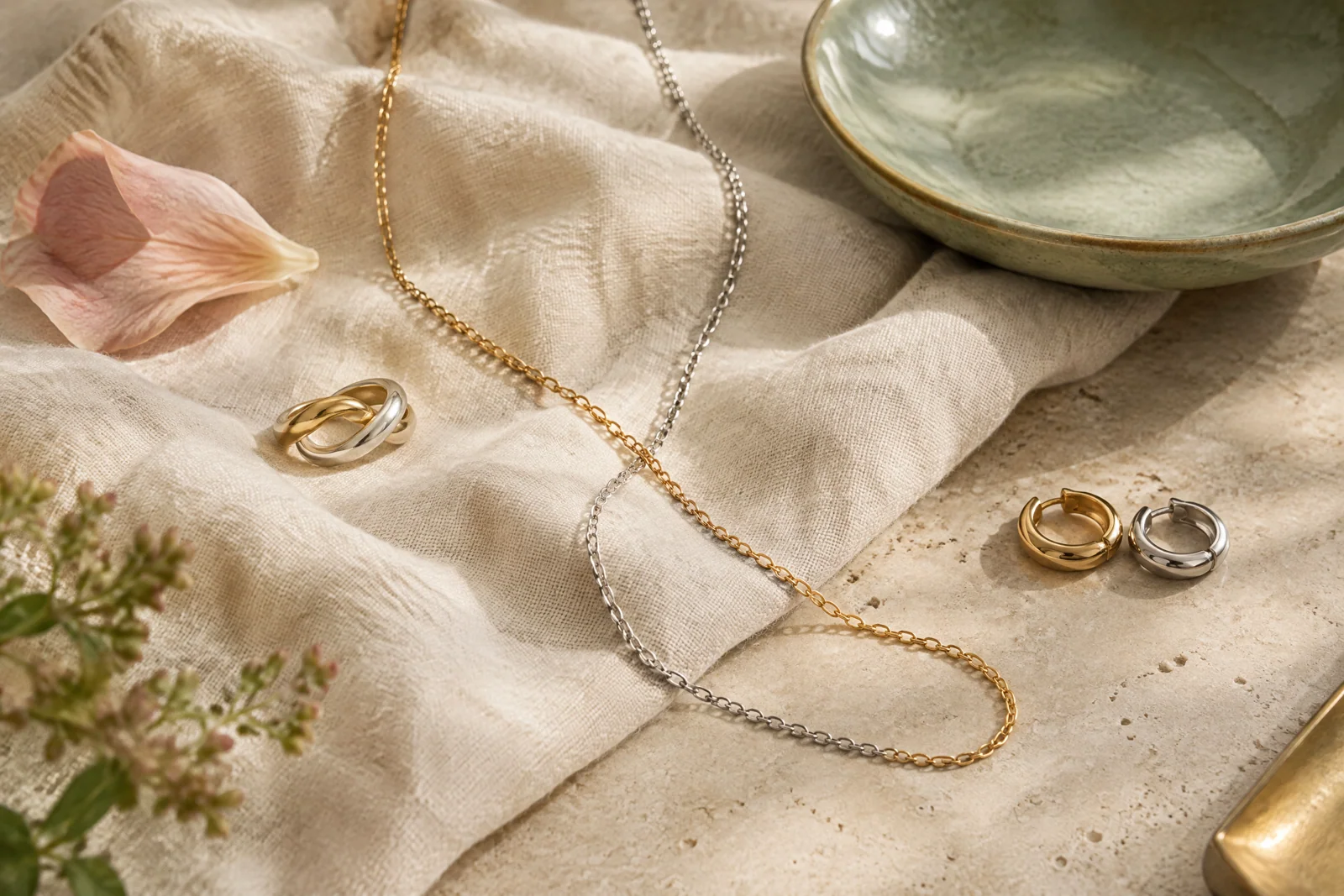
Once the shape feels right, look at color. Earrings can pick up one note from a print, echo a button or bag detail, or add a small contrast against a solid top. Warm gold-toned accents bring a sunny note to cream, rust, olive, and many warm neutrals; silver-toned details can feel crisp beside cool blue, charcoal, or white. These are styling possibilities, not rules about which colors are allowed together. Let your own palette lead the earring styling rather than treating metal tone as a strict formula. If you already wear mixed metals, let a repeated detail—such as a similar finish or shape—make the combination feel deliberate. This is earring styling as editing: a small echo can connect otherwise different pieces.
Color can also soften a strong neckline. A vivid blouse with a sharp collar may feel more approachable with a simple earring in a related hue, while a plain black or cream top can welcome an unexpected color at the ear. Translucent or pale materials catch light differently from opaque, saturated ones, so look at the earrings beside the actual garment rather than judging them alone. Daylight is helpful: it shows whether a color blends gently, pops clearly, or shifts warmer than you expected.
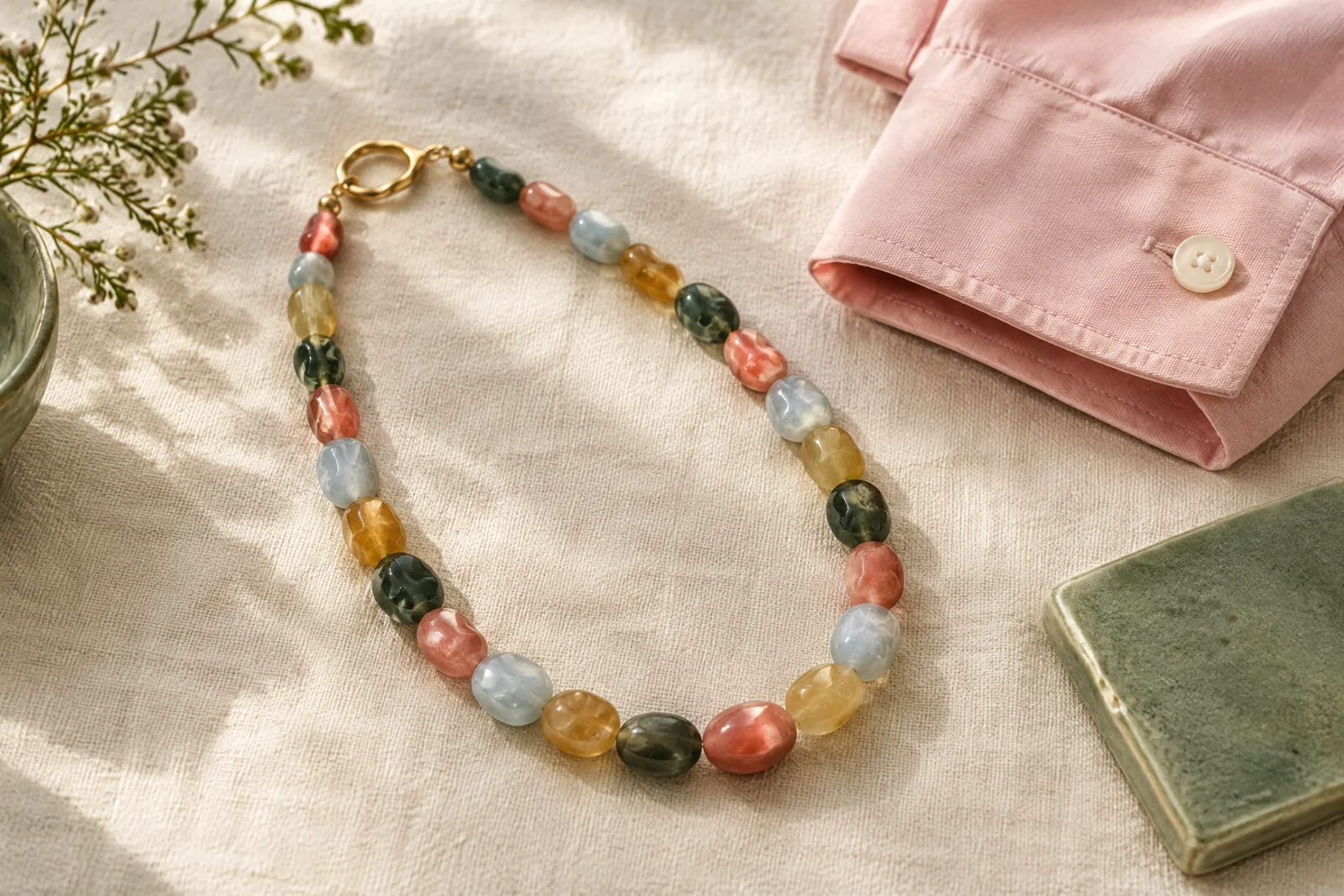
Texture counts as much as hue. A chunky knit, crisp poplin, silky blouse, and linen shirt each have a different visual rhythm. Smooth hoops can bring polish to textured fabric; beaded or softly irregular details can make a minimal neckline feel less formal. If the garment has ruffles, embroidery, a prominent bow, or a bold print near the face, let one element lead. This pared-back approach keeps earring styling clear rather than crowded. Simplifying the earring is not playing it safe—it can make the garment's detail easier to appreciate.
When you want color without a large silhouette, consider a small accent rather than a long statement. Duddingtons' Misty earrings are listed as clear resin with gold-plated mixed-metal details and an overall width of 30 mm. Their translucent look offers a different visual effect from opaque, brightly colored earrings; the description is a product detail, not a promise about weight or wear for every person. You can browse the broader earrings collection for shapes and colors, then compare candidates with the necklines already in your wardrobe. Matching what you own is a practical starting point for everyday earring styling.
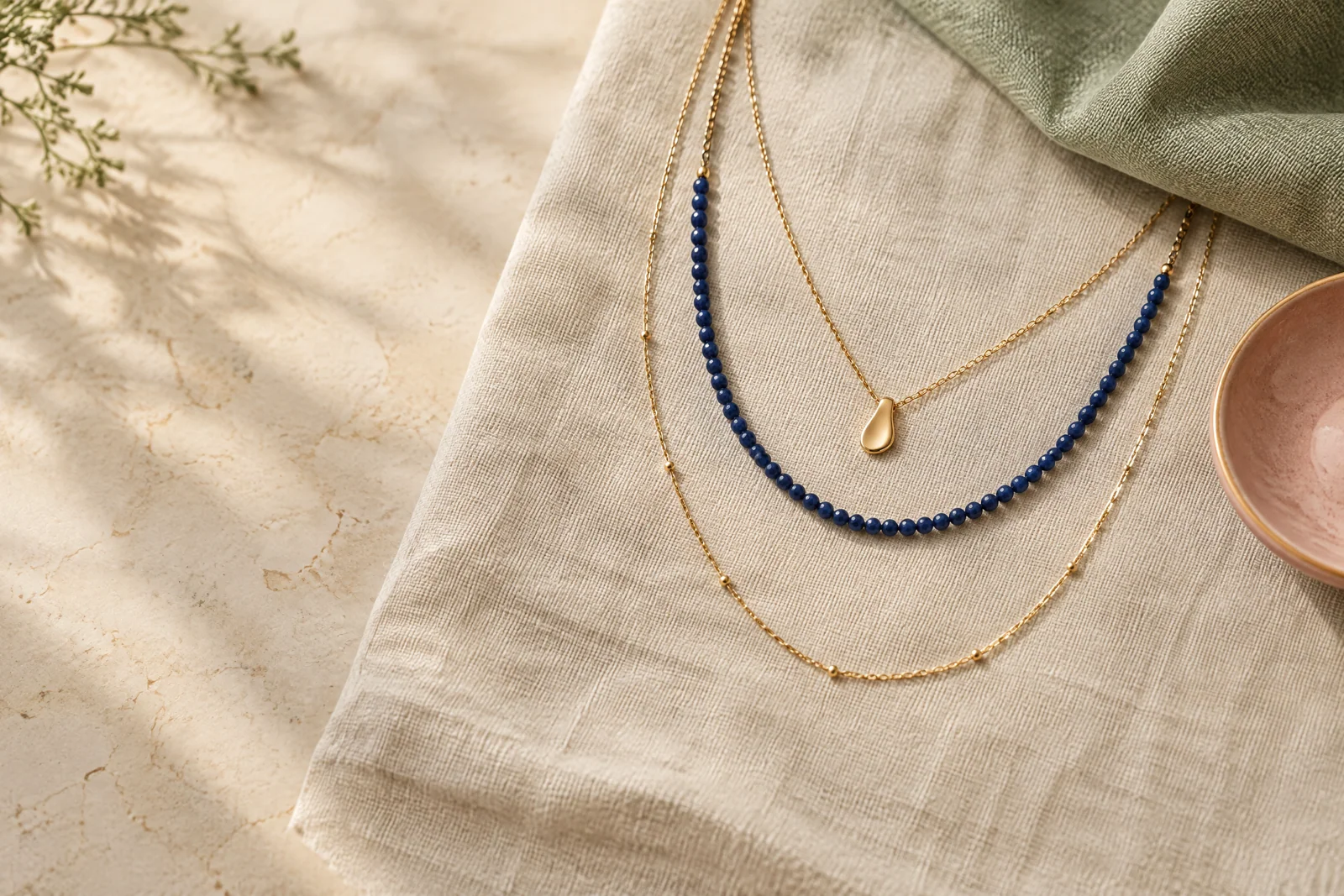
It also helps to decide which piece will lead. If you are wearing a noticeable necklace, choose earrings that sit comfortably alongside it rather than matching every detail. A bare neckline can take more attention at the ears, while a pendant or layered chain may call for smaller earrings. This simple balance is often the most wearable approach to earring styling. There is no need for perfect coordination: one shared color, finish, or rounded shape is often enough to create a visual connection. For another angle on combining pieces, explore the necklace collection and think about how its silhouettes share space with earrings.
Make a quick mirror check and trust your own eye
Before heading out, take a brief whole-outfit look rather than inspecting the earrings alone. Check the front, then turn slightly to see whether the earring and neckline still feel balanced from the side. Notice where the earring ends: does it clear the collar, brush the shoulder, or meet a detail that makes the area feel crowded? These observations are more useful than a universal rule about which length belongs with which top; they make earring styling personal and repeatable.
- Check the focal point. Decide whether you want attention on the face, neckline, or a print. If two areas are competing, simplify one.
- Check movement. Turn your head and lift your arms. Make sure the earrings sit comfortably and do not repeatedly catch on hair or fabric.
- Check color in context. Hold the pair beside the actual top and, if relevant, the necklace or glasses you plan to wear.
- Check the mood. A polished shirt can take a playful accent; a casual tee can make a sculptural pair feel easy. Choose the balance that feels like you.
If you are between two options, photograph each with the outfit in the same light. A quick side-by-side often makes the answer obvious: one may frame the face, while the other pulls attention toward a collar or shoulder seam. You can also keep a small note on combinations you enjoy—such as hoops with open collars or short drops with crewnecks—so getting dressed is easier next time. Personal earring styling grows from noticing what you reach for and why, not from building a wardrobe around a checklist.
Above all, let the garment guide you without taking away your freedom. A clean neckline can be the backdrop for a favorite expressive pair; a detailed neckline can make a tiny, meaningful accent feel just right. Try the unexpected combination if it makes you smile. The most useful advice is the advice that helps you wear your jewelry more often, with ease and a little curiosity. Treat earring styling as a finishing detail, not a test you have to pass.
Related reading
Continue exploring the Duddingtons style edit: How to Layer Necklaces Without the Tangles, How to Style Beaded Necklaces with Everyday Outfits, and A Practical Guide to Mixing Gold and Silver Jewelry.