There is a particular pleasure in putting on one expressive piece and letting it change the mood of an outfit. Statement earrings do exactly that: they draw the eye toward your face, add a point of color or shape, and make even a familiar shirt feel newly considered. The trick is not to memorize strict rules or build an outfit around a single accessory. It is to make a few small decisions about scale, color, and visual balance, then leave room for your own taste. Whether your pair is a sculptural hoop, a bright bead, or a playful drop, these ideas will help you style statement earrings with ease, for an ordinary weekday as much as a dinner out.
Start with scale, then make one thing the focal point
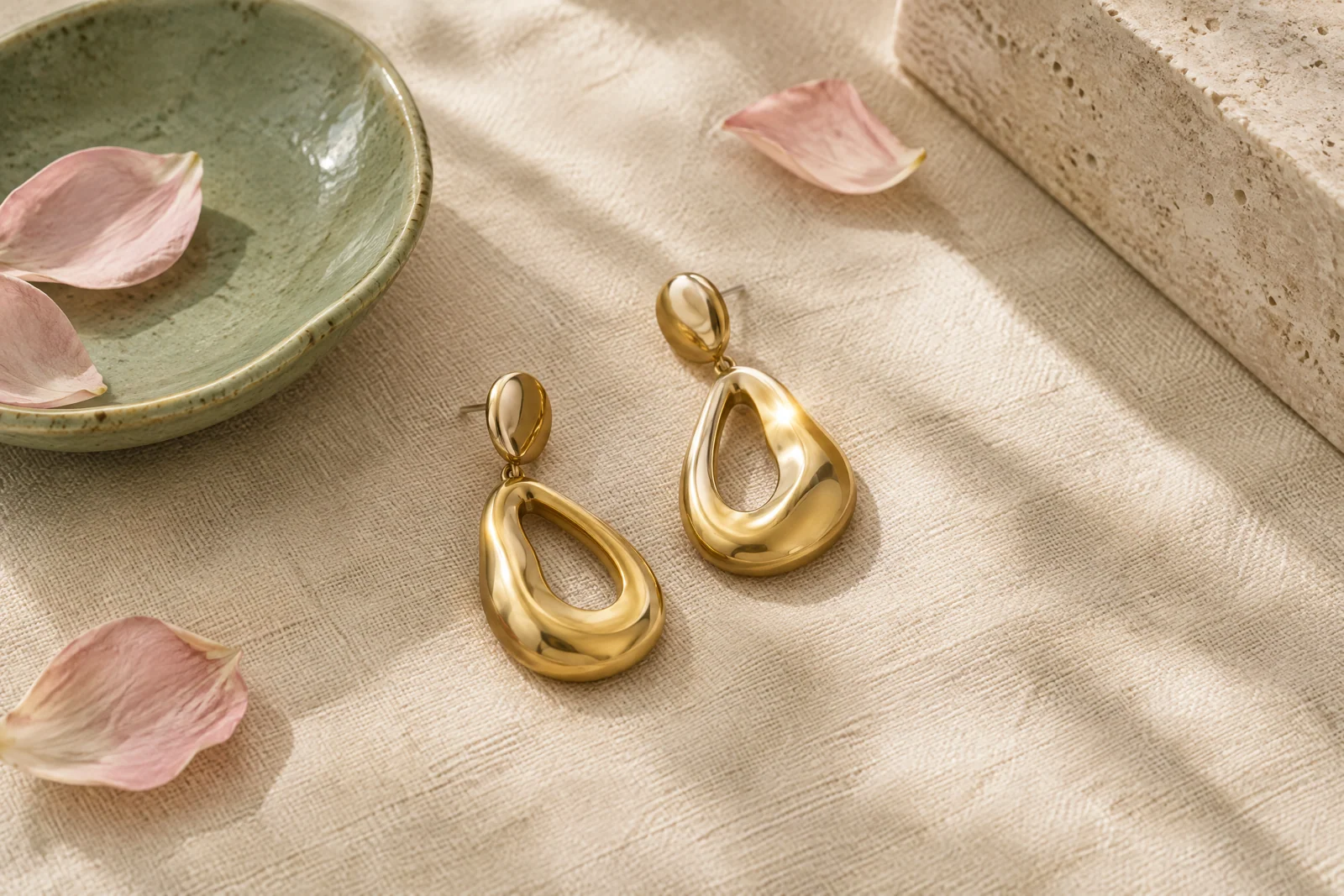
“Statement” is less about a universal size than the amount of attention an earring asks for. A broad hoop may read as graphic; a fine, long drop can feel dramatic through movement; a compact stud with a vivid surface can hold its own through color. Choosing statement earrings can be simple: one pair, one point of view. Begin by noticing what stands out about your statement earrings. Is it the silhouette, shine, texture, or hue? Let that quality lead, rather than automatically adding more decoration elsewhere.
For statement earrings, the relevant scale is the whole look, not the measurement alone. Consider the proportions around your face, too. A larger earring can look intentional beside a simple neckline and clean hair shape, while a smaller but highly colored pair may be all the emphasis a patterned blouse needs. If you are unsure, put on your outfit first, then add the earrings last. This small test helps statement earrings feel intentional rather than overplanned. Step back from a mirror and notice where your eye lands. If it moves comfortably between your face and the outfit, the scale is likely working. If several details compete at once, edit one of them; you do not need to change the earrings you love.
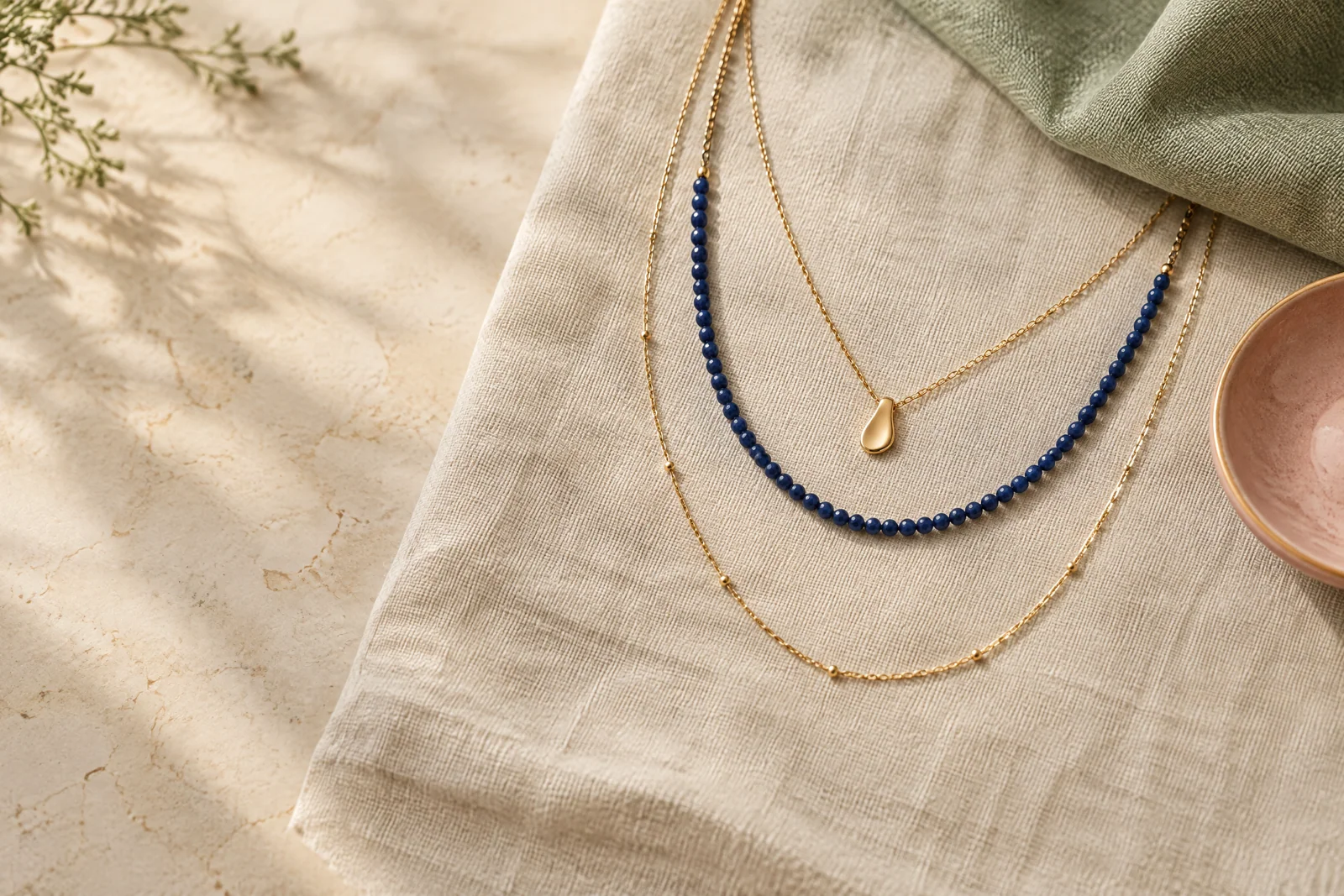
Think of the other pieces as supporting actors. A fine chain or a plain ring can sit quietly beside statement earrings. If you wear a necklace, compare its visual weight with the earrings: a substantial pendant and an elaborate drop may both be lovely, but together they can crowd the space around the face and collarbone. Try the earrings alone first, then add a necklace only if the neckline has room for it. Browsing the earring collection with shape and scale in mind can help clarify whether you reach most often for a hoop, a stud, or a longer silhouette.
Use color as a bridge, not a matching test
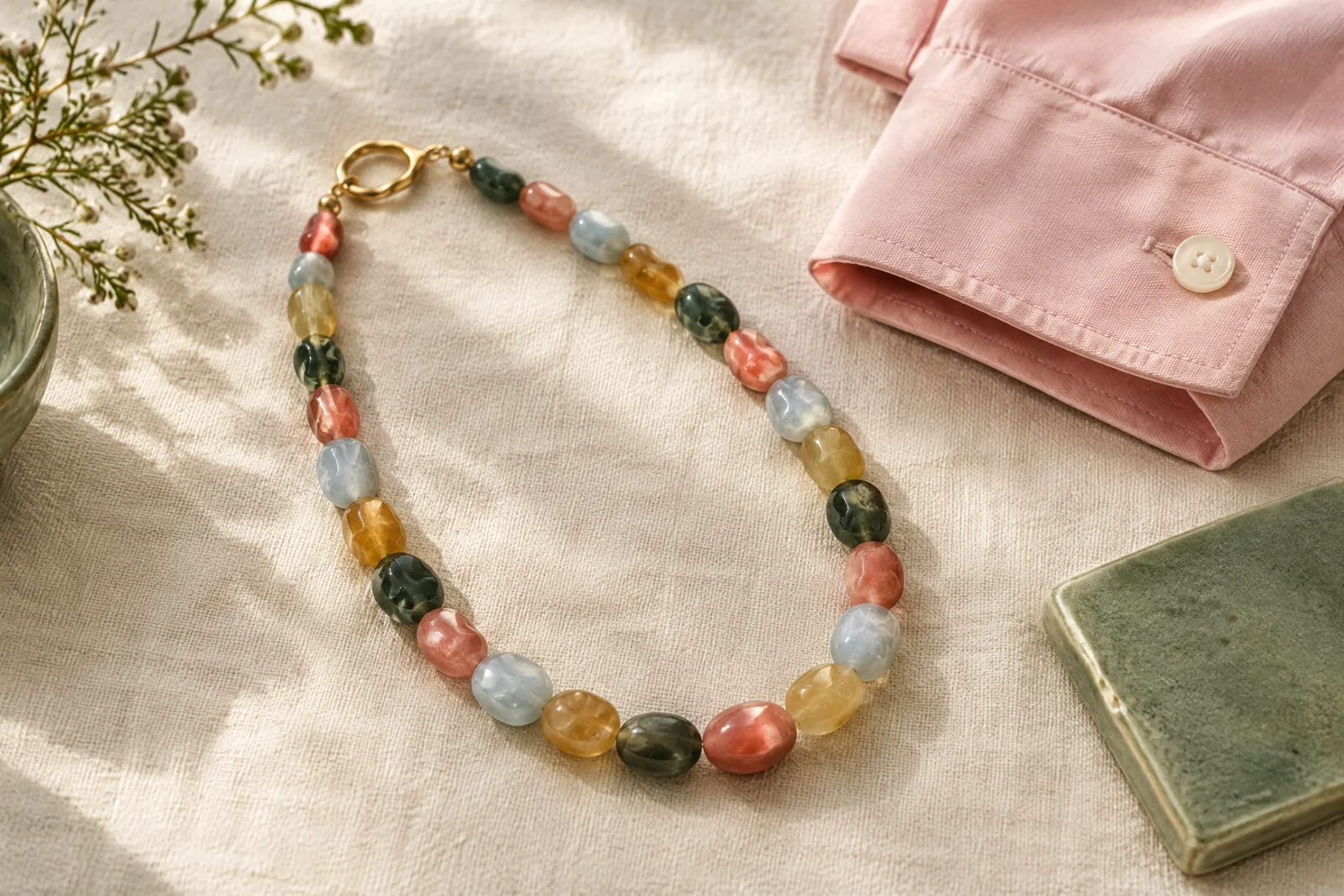
Statement earrings can connect naturally to clothing through color, but an exact match is only one option. A warmer coral can enliven cream, denim, or soft brown; sage green feels grounded with ivory, navy, and washed pink; clear or pale pieces catch the light without introducing a strong competing hue. These are styling possibilities, not a dress code; let statement earrings set the color mood you want. Start with colors already present in your outfit and decide whether you want the earrings to blend in, echo one detail, or provide a deliberate contrast.
A useful formula is to repeat a color once, not everywhere. If the earrings are blue, a blue stripe or a small accent in a scarf can make the choice feel connected. You do not need a matching bag, shoes, and necklace. With statement earrings in a brighter shade, let clothing act as a calm backdrop: a white shirt, a single-color knit, or a straightforward dress leaves space for the color to register. Conversely, if your clothes are already patterned, pick up one quiet shade from the print rather than competing with its busiest color.
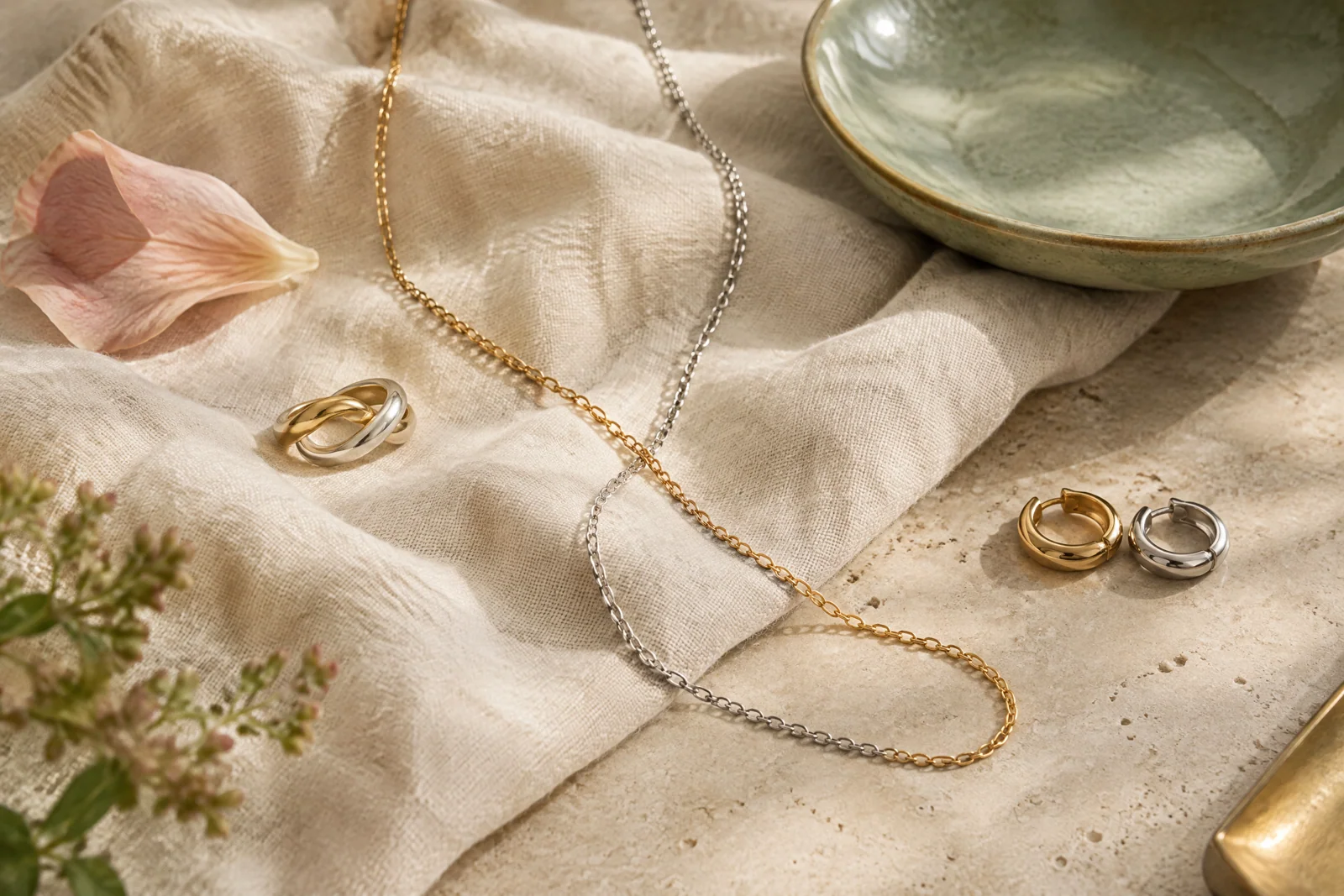
Metal tone can work as another bridge, helping statement earrings feel at home with the rest of your jewelry. Gold-colored details often sit naturally with warm neutrals, while silver-colored details can sharpen cool blues and greys; either can also be mixed with the other when the combination feels deliberate. One small repeated detail—a metal button, watch, or ring—is usually enough to make mixed finishes look considered. If you enjoy experimenting, our practical guide to mixing gold and silver jewelry offers more ways to build a relaxed connection between finishes.
For a concrete example of scale and color, Duddingtons' Nova Hearts earrings pair a heart-shaped metal center with small faux pearls; the catalog describes them as about 30 mm wide and made from gold-plated stainless steel with faux pearls. Their light look can be the outfit's main detail against a plain tee or soft knit. The point is not to copy a product look exactly, but to notice how a defined silhouette and a restrained palette can carry the whole styling idea. That is one easy way to make statement earrings the outfit’s focal point.
Balance the neckline, hair, and other details
Necklines create the frame in which earrings appear. Choose statement earrings with that frame in mind. A crew neck or high collar leaves a simple field around the face, so a substantial hoop or drop can stand out cleanly. An open V-neck introduces its own lines; shorter earrings or a neat hoop may keep the look from feeling too busy, though a long earring can intentionally echo the vertical shape. With a strapless or off-the-shoulder top, you have more room to choose—consider whether you want the earrings to be the only focal point or to share attention with a necklace.
Hair is another styling tool, not a requirement. A small adjustment can reveal statement earrings without changing your look. Tucking one side behind an ear reveals a hoop or sculptural shape while keeping a loose, everyday feel. A low bun or ponytail makes a drop visible; hair worn down can soften a large outline, especially when the earring catches glimpses as you move. Choose the arrangement that feels like you and suits the day. You do not have to change your haircut or wear your hair up just because an earring is noticeable.
When you want to wear more than one accent, create a clear order so statement earrings do not compete with every other detail. For example, let the earrings lead and choose a delicate necklace, or make the necklace the focal point and choose a small stud. A moderate hoop can work with a short chain if their shapes do not tangle visually. If both pieces are textured or brightly colored, try them separately before deciding. The necklace collection can be a useful place to compare fine chains and more substantial shapes when you are choosing a companion piece.
Two Duddingtons examples show how differently scale can read: Misty is described as a 30 mm clear resin earring with gold-plated details and a hinged fitting, while Lyon is a glossy, chunky gold-plated stainless-steel hoop offered in 24 mm and 28 mm sizes. The first brings transparency and a little brightness; the second gives a compact, defined outline. Treat these as distinct styling directions, not as a ranking. A clear, larger silhouette can be surprisingly quiet with patterned clothes, while a smaller solid hoop can still feel bold because of its volume.
Make the choice fit the moment—and your comfort
Everyday styling becomes easier when you ask what the day actually asks of you. Statement earrings for a weekday can be expressive and still feel uncomplicated. For a workday, choose the pair that adds personality without making you think about it every few minutes. With a familiar shirt and jeans, earrings can supply the color or polish without requiring a complete outfit change. For an evening plan, you might choose a stronger shape or shine and keep the rest of the look uncomplicated. A weekend outfit can be more playful: let a motif or unexpected color set the tone, then repeat only one small detail elsewhere.
Comfort belongs in the decision. Notice how an earring fastens and sits, how it moves when you turn your head, and whether its weight feels right for your own ears. Product descriptions can tell you about listed materials, dimensions, and closure styles, but personal comfort is best judged by the wearer; avoid assuming that a size or material will feel the same to everyone. If you are trying a new silhouette, wear it for a short while at home and see whether you like how it moves before planning a long day around it. Check that the fastening is secure and that hair or a scarf is not catching on it.
Care can be just as individual as styling. Follow any care guidance supplied for the specific piece, and avoid assuming that every earring tolerates the same products or cleaning method. When different materials are combined, a cautious approach is sensible: keep the pair away from cosmetics and perfume during dressing, and store it separately so it is less likely to rub against other jewelry. If a piece needs cleaning, use advice appropriate to its stated materials rather than soaking or using a device by default.
Most of all, do not wait for a special occasion to wear something that makes you smile. Let statement earrings be part of your real-life wardrobe. A bold earring can be the whole point of an otherwise simple outfit; it can also be one small color note among many. The best statement earrings are not the ones that obey the most rules, but the ones you reach for and feel like yourself in. Make one choice about the focal point, one about color, and one about comfort. Then go about your day.
Related reading
For more easy ways to build an outfit around jewelry, explore how to layer necklaces without the tangles, how to style beaded necklaces with everyday outfits, and a practical guide to mixing gold and silver jewelry.